Tasty figs get new attention on China's plates, farms
 |
|
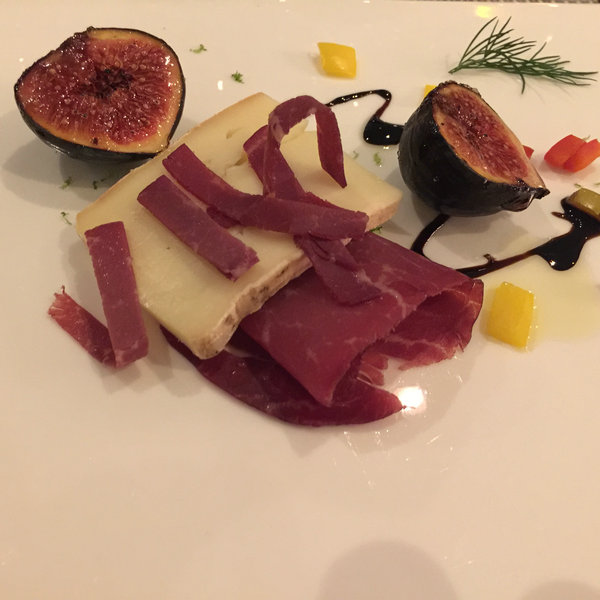
Figs are paired with Italian ham and cheese at a Beijing wine dinner.[Photo provided to China Daily] |
Other reports note that the fig has also been part of traditional treatments for "sexual weakness".
The best-known Western fig, the Ficus carioca, did not come to China until some time in the early Tang dynasty (AD 618-907 ), and it arrived already dried. By the 16th century, this fig and many others were planted, probably by missionaries, around the lower Yangtze, joining other varieties already there.
Today, the fig is one of the "next generation fruits"-a group that also includes pomegranates and blueberries.
Such fruits have been popularized for their health benefits, says professor Ma, which appeal to more and more consumers in China. Figs contain a type of antioxidant called phenols, which studies have shown may lower your risk of heart disease and cancer by preventing cell damage.
Fresh or dried, the fruits are also a good source of dietary fiber that helps digestion. That's a big plus in a society that has seen people become more sedentary, sitting in front of computers or televisions for much of the day.
In 2008, a group of Ma's fellow professors won support from more than one provincial government for a fig project.
"We work with Israeli experts-who have mastered techniques for growing figs in the desert-to bring the technology they have developed both for growing and exporting around the world," she says.
Her dream: Producing figs on a big scale in Xinjiang one day, both for the ready market there and ultimately for export.
"The conditions there are similar to Israel or Turkey," she says.
That goal, with its economic potential for China's west, has kept the energetic Ma traveling from her own test plots at the university in suburban Beijing to commercial growers in far-flung provinces.
"It would be a great way to develop a family business for Xinjiang farmers," she says, "and I enjoy doing the basic research."
It's a little personal, too.
"My husband and I really like figs!"