Spanish chef eager to make his mark in Beijing
 |
|
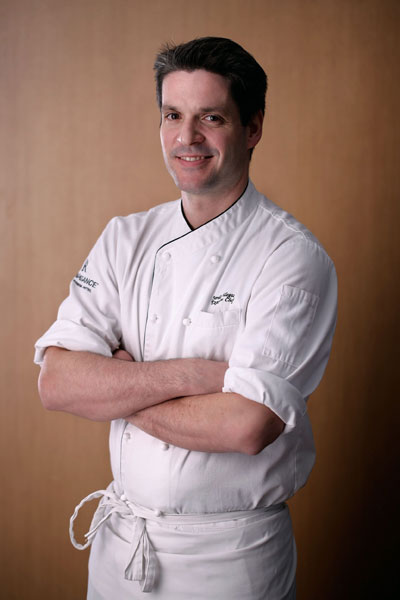
Jordi Villegas, executive chef at Renaissance Wangfujing hotel. [Photo provided to China Daily] |
Jordi Villegas can't wait for his mama to visit China's capital.
First, the 37-year-old Spanish chef says, because the demands of his job have kept him from going to his home near Barcelona for the past three years. Second, mom Elvira is an accomplished chef in her own right, who visited her son in Hong Kong and teamed up with him for a weeklong guest-chef stint with him in his restaurant there.
They plan to do that again in Beijing, to kick off a Spanish Cuisine Month at the Renaissance Wangfujing hotel in the capital, where Villegas has been ensconced as executive chef since last summer. But the eager son will have to be patient a bit longer, until mom recovers from knee surgery this spring.
By June he hopes she'll have come, and together they will introduce favorite dishes from home. That can be a challenge, as people don't know Spanish food here as well as they do French or Italian.
"It's not Mexican food, not spicy like that," he says, waving away one common misperception. While legendary chef Ferran Adria of El Bulli's fame has put molecular Spanish cuisine in the limelight, Villegas is eager to present simpler, traditional fare.
"I'm not doing molecular-the Chinese aren't into that and I don't really know how," he says, laughing. "I want to do basic food well."
That means we can expect the freshest ingredients in a fragrant seafood paella, the grand collage of rice and choice morsels of meats and vegetables that has become a national dish. There will also be tapas, black squid-ink noodles and Iberico ham, an icon of Spanish cuisine.
"Iberico is not Parma ham," he says, though many confuse it with that famous Italian export. "Ours comes from our indigenous black pigs, and the taste is very distinctive."
He also looks forward to pairing these dishes with good Spanish wines: "No Spanish meal is complete without a bottle of wine," he says with a big grin.
Meanwhile, Villegas is enjoying putting his stamp on the recently opened hotel and its restaurants. Spanish items are making their way slowly to the menu, including Barcelona-style short ribs and a weekly tapas special.
Sourcing ingredients takes a lot of his time, he says. Vegetables are all local, as is meat for the buffet, though meats for restaurant specials and events must be imported.
"It's a little more challenging here," he concedes. "In Hong Kong I can get a fish that was caught in France yesterday and have it on a plate today. Here it can take five days for the customs procedure. That means it's not as fresh, so we'd always like to find local sources with good quality."
One of those is a suburban Beijing farm that buys two-day-old duck chicks from France and then fattens them up here to produce local foie gras. Villegas still gets bright-eyed about his visit to that farm, where he examined the facilities and discussed the production system there.
"We're having a special foie gras promotion at the hotel this month," he says. "Chinese guests like liver very much, though they always prefer hot liver dishes, not cold, I have learned."
As the vice-president of the Spanish Chefs Association of Asia, a group that formed in Hong Kong in 2002, Villegas says he's enjoyed sharing what he knows with Chinese chefs, putting on cooking classes and going to schools for demonstrations. A favorite event the chefs hosted last year: An Iberico ham-carving competition for about a dozen Chinese chefs.
Villegas says he's always learning about food, thanks to growing up in a family of chefs. His grandfather opened the family restaurant in 1960, and it continued until last year when his parents turned 65 and retired.
As a kid he loved hanging out in the kitchen and mixing things. "Most 12-year-old boys then wanted to be astronauts," he says, "but I knew then I was going to be a chef." His dad pushed him out of the family restaurant by the time he was 17, thinking young Jordi might benefit from a less predictable, less comfortable learning environment.
More experience and culinary school at 17 simply magnified that conviction.
"It's always creative and it can be different every day, whether you are experimenting with a new cuisine or exploring the markets in the morning," he says. "Traveling, experiencing-just smelling! I will never know everything about food that I want to know."