Sweet traditions
 |
|
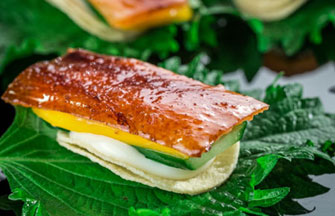
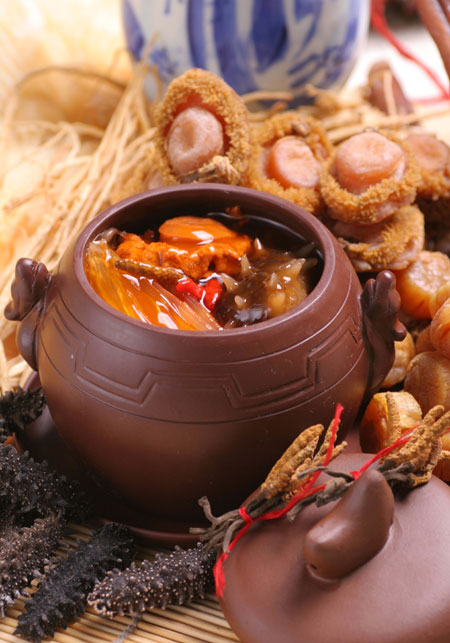
Fans of Huaiyang cuisine, one of China's fourmajor cuisines, can experience the delicacy at the newly opened Beijing branch of Yechun Teahouse. [Photo/China Daily] |
Most of the ingredients used in the restaurant are transported from Yangzhou, to preserve the quality and traditional taste, according to Chen Jun, general manager of the Yangzhou Hotel, the eatery chain's parent company.
Tang gansi, or boiled scaly tofu threads, is a widely known Huaiyang-style dish. Yechun Teahouse's version was the most delicious I had ever tried.
It sounds easy to make: Slice tofu into very tiny shreds, pour boiling water on the shreds three times, then soak them in seasoned soup.
However, the flavor of tang gansi differs from one restaurant to another, because even when the ingredients are the same, the thickness of the bean-curd threads, the speed the boiling water is poured, and the amount of seasoning added to the soup all affect the taste and texture.
The quality of tofu makes the biggest difference, and the threads will become too soft, hard, or dry if the tofu is not good enough.
The Beijing branch brings in tofu from its Yangzhou kitchen, because the water in Beijing is too hard to make soft and non-porous tofu, according to Chen Ende, a Huaiyang cuisine master.
The result, I found, is that the tofu is soft and tender at first bite, and then chewy and a little bit sticky. The tofu threads seemed no thicker than a millimeter.
Seasoned with ginger, sesame oil and other condiments, the fresh taste of the tofu lingered on my tongue even after I stopped eating it.
I was also surprised to find a variety of stuffed buns at the restaurant at a relatively cheap price-on average 3 yuan (48 cents) each.
Huaiyang is one of the three main dim sum styles in China (the others are Cantonese and Peking). The dim sum at Yechun Teahouse in Yangzhou is so famous that it has been served at State banquets.
Compared to Cantonese versions, Huaiyang dim sum is a little sweet and there are more than 500 varieties, with different stuffings, shapes and appearances, according to Chen Ende, the master chef.
All kinds of vegetables, fish, crab and red meat, wild herbs, nuts, truffles and mushrooms are used to stuff steamed buns in accordance with the seasons, to make the freshest dim sum, Chen says.