Heritage on a plate
 |
|
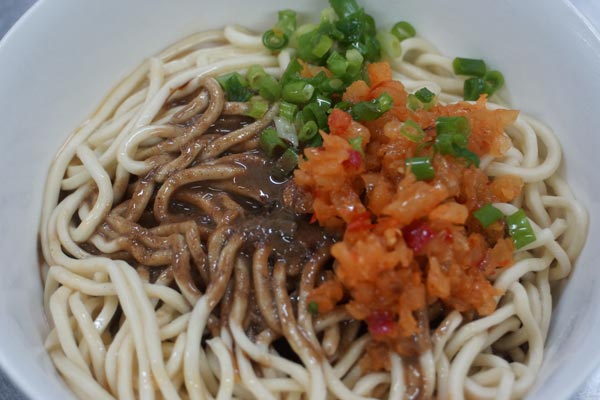
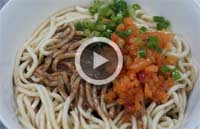
Popular Wuhan noodle snack, reganmian, is applying to enter the national intangible cultural heritage list. Ye Jun/China Daily |
|
|
Chinese food joins the crowd of cuisines seeking global status as a UNESCO intangible cultural heritage, Ye Jun reports.
China has a rich food culture, with many dishes nationally famous and part of the country's intangible cultural heritage. However, none of them has made it on UNESCO's list. Industry experts have been preparing material about Chinese cooking techniques and traditional banquets, hoping to make a breakthrough application next year.
Kimjang, the making and sharing of kimchi in Korea, has already won a spot on the list of UNESCO's world intangible cultural heritages. Washoku, traditional Japanese cuisine, and ancient Georgian traditional qvevri wine-making culture was also added to the list last December during UNESCO's 8th intergovernmental council in Azerbaijan - the same meeting where Chinese zhusuan, traditional calculation by abacus, was listed.
Recognition for food-related items is not new. France's multi-course gastronomic meal, with its rites and its presentation, was one of the first to make the list in 2010. Earning UNESCO status at the same time was traditional Mexican cuisine, and the Mediterranean diet of Cyprus, Croatia, Spain, Greece, Italy, Morocco and Portugal.
China has 29 items on UNESCO's Representative List of Intangible Cultural Heritage, and seven items on the list of Intangible Cultural Heritage in Need of Urgent Safeguarding. But none of them are food related.
Bian Jiang, deputy director of the China Cuisine Association, says that is a pity.
"The development of Chinese civilization evolved around gourmet culture," Bian says. For example, ding, an ancient cooking vessel with two loop handles and three or four legs, was also a symbol of dynasties in ancient China.
Many important festivals in China are marked with food. Spring Festival starts with a bowl of "eight treasure" congee, followed by the making and eating of jiaozi (boiled dumpling) on Spring Festival Eve and Spring Festival Day, and ends with the eating of yuanxiao, glutinous rice ball on the 15th day of the Lunar New Year.
According to Bian, China's Ministry of Culture contacted the China Cuisine Association in 2011, designating it as "the main body" of application by Chinese cuisine for world intangible cultural heritage status.
Bian says the association put forward written and video materials for "traditional Chinese cuisine cooking techniques", but the ministry still has the application presentation under review.