Coffee break in tradition
Sentiments like these are exactly what coffee promoters like to hear, and explain why a wide array of companies are speeding up expansion to win a decent slice of China's coffee pie.
Currently, Seattle-based Starbucks operates more than 650 stores across 51 Chinese cities and takes the lion's share in the market of specialty coffee shops - more than half in terms of revenue, according to a Euromonitor research report in 2011 - and it plans to increase the number to 1,500 stores, across more than 70 cities and triple the number of employees to 30,000 by 2015.
"We have an extremely ambitious development plan in China," said Belinda Wong, president of Starbucks China. "China has been designated as our second home market outside of the United States. We believe China will become our largest market outside of the US by 2014."
As a latecomer to the mainland market, Pacific Coffee has made up ground quickly with an even more aggressive expansion plan, after selling 80 percent of its stake to CRV, one of China's largest retail chain enterprises.
The company now has about 100 stores in China and plans to have more than 1,000 within the next five to eight years.
"Starbucks has pioneered the development of the American-style coffee chains in China. Costa Coffee serves coffee in a typical European style, but as a Hong Kong-based coffee house, we are more localized, a combination of both Western and Chinese elements, with red cozy sofas, red blooming-lotus chandeliers and dark wood decoration," said Tong from Pacific Coffee.
 |
|
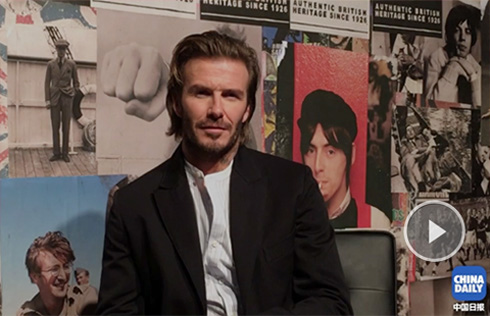
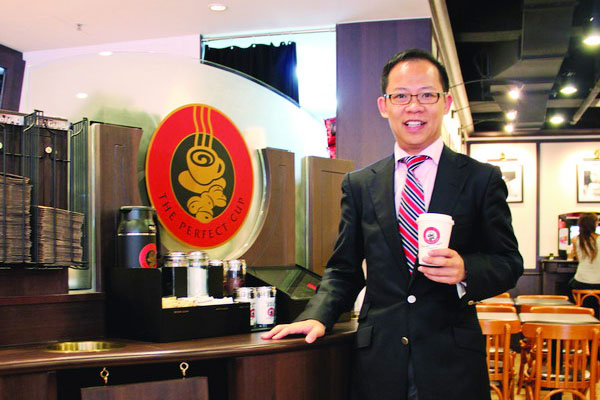
Raymond Tong says that in China, coffee is more like a symbol of Western affluence and a social trend. [Photo / China Daily] |
To add more Chinese flavor, Tong said, Pacific has introduced Huadiao mocha, which combines a Chinese yellow wine with a mocha blend, and Erguotou chillino, iced coffee mixed with Chinese liquor that has an alcohol level of more than 50 percent.
"We don't have a rigid format and try to be a bit more flexible and creative in our products to suit the Chinese taste," he said.
London-based research company Euromonitor International estimates the total turnover of China's market for coffee shops hit 3.5 billion yuan ($558 million) last year and projects it will triple to about 10 billion yuan by 2016.
However, expanding in China means reaching out beyond the country's big cities, and the hefty cost of a cup of coffee may deter customers in third or fourth-tier cities.
"Starbucks itself has been grappling with the high price of coffee, which is roughly in line with that in the United States," said Stacy Wan, an analyst with Euromonitor." Some customers might shy away from it.
"But the top concern for most coffee shops remains rising operating costs. Skyrocketing rent and labor costs may keep those big coffee chains from protecting margins."
The fierce competition among coffee shops has also created a demand for thousands of baristas, resulting in the rise of specialist training schools.
Qi Ming, a 33-year-old coffee bar owner and principal of Blend Coffee College in Beijing, said his organization has trained hundreds of baristas in the past year for the likes of Starbucks and Costa Coffee.
"Owning a coffee shop is not only an attractive business proposition, but also a dream for many Chinese urbanites, who expect to be educated on how to be a professional barista and how to run a coffee shop," he said. "To cater to them, we provide a series of bean-to-cup classes and cafe management courses."
Qi said, as a member of the Specialty Coffee Association of Europe and the US, the college hopes to double the number of barista students from 400 to 800 next year.