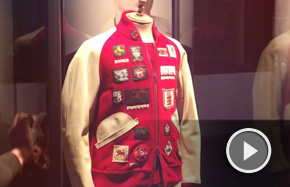
Vintage afterlife


After the charity workers made their selections from the items given, there were many left, which might be used to create rags or mops because they were not wearable any more. Zhang, seeing a no-longer-perfect black polka-dot dress, was suddenly inspired: "They are really good materials! Why don't I use them as the material of a new garment?"
Reclothing Bank was born. The series, just like traditional clothing lines, is produced twice a year, with spring/summer and autumn/winter collections.
|
|
| Gimme shelter |
|
|
| Everything but Prince Charming |


The result has won applause from wearers and onlookers alike. Since it is a method of recycling fashion, people will naturally think it is eco-friendly. Chinese rising star Ni Ni picked one dress from the label, and has worn it in a series of fashion photo shoots, which were featured in the magazine Lohas.
In Beijing, Wei Minghui writes in his self-introduction for social networking websites: "My hobby is collecting garbage, and going to the old market."
The former graphic designer has achieved something by "collecting garbage". In 2009, he created a label named Neicun, which produces various kinds of stylish totes and handbags.
That idea came in 2008 when the Beijing government issued the order to curb plastic bag use. Many small shops threw away some colorful posters and advertisements made from plastic like cloth, which was also banned at that moment.
Wei carted some home, and asked a tailor to make 200 shopping bags out of these colorful discarded fabrics. He and his wife took the bags to 798 Art District and sold the bags for 18 yuan per piece - and had plenty of customers.
Form that original idea of Neicun, he later developed products like iPad cases, ties, purses and briefcases.
Now his products, all made of discarded fabrics, are sold in Ullens Center for Contemporary Art Store and Brand New China store, which are famous for their artistic and innovative products.
It is not only the Chinese "indy" fashion designers who are riding this trend. International fashion labels are paying attention. Swedish fast-fashion giant H&M, for example, has launched a call-out for consumers to donate their old garments.
Catarina Midby heads the fashion and sustainability department at H&M. On a visit to Beijing, she showed an orange one-piece evening dress to reporters. The dress, priced at 699 yuan, is made of recycled polyester, which mainly comes from old garments, and wasted raw material leftover from production.