Great Wall of China Named as 'New' World Wonder
Updated: 2007-07-09 08:35
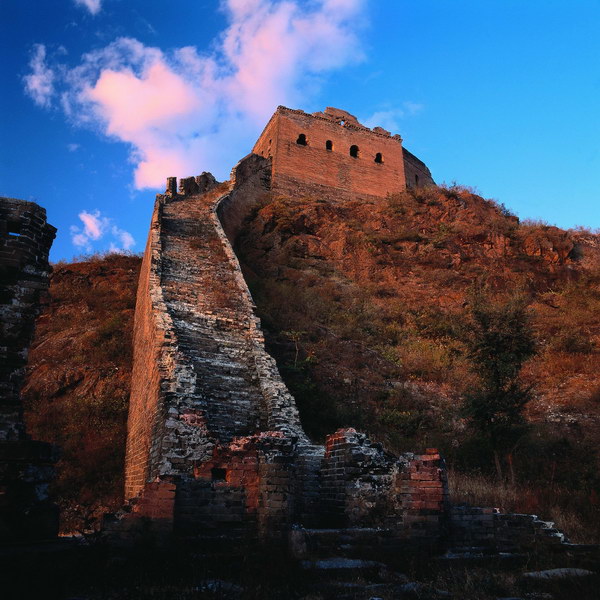
The Great Wall of China was named as one of the new seven wonders of the world Saturday in the Portuguese capital of Lisbon.
Brazil's Statue of Christ Redeemer, Peru's Machu Picchu, Mexico's Chichen Itza pyramid, Jordan's Petra, the Colosseum in Rome and India's Taj Mahal were also chosen as the modern-day seven wonders of the world, following a global vote by about 100 million internet and telephone voters around the world.
The seven winners were announced in a televised ceremony at Lisbon's Benfica stadium that was watched by audiences in more than 100 countries and regions.
A plethora of stars and dignitaries, including Portuguese President Anibal Cavaco Silva, Prime Minister Jose Socrates and Spanish tenor Jose Carreras, attended the ceremony.
After the announcements, the New Seven Wonders of the World organizers awarded certificates and souvenir badges to representatives from the seven nations.
The campaign to select the new seven wonders of the world was initiated in 1999 by Swiss adventurer Bernard Weber, with nearly 200 nominations coming in from around the world.
Weber's Switzerland-based foundation, called New7Wonders, aims to promote cultural diversity by supporting, preserving and restoring monuments.
The list of candidates had been narrowed down to 21 finalists by the start of 2006.
The original seven world wonders, believed to have been compiled by an ancient Greek author, were: the Great Pyramids of Giza; the Lighthouse of Alexandria; the Statue of Zeus at Olympia; the Colossus of Rhodes; the Temple of Artemis at Ephesus; the Mausoleum of Halicarnassus; and the Hanging Gardens of Babylon.
Out of these, only the Pyramids of Giza remain standing.
Related reading:
The Great Wall (North China)
Brief Introduction
One of the most magnificent ancient military defense works in the world.
The construction of the segments which later made up the Great Wall began
during the Spring and Autumn Period and lasted into the Warring States Period
(c. 7th century BC-4th century BC). Many feudal states built hundreds of li of
wall fortifications as boundaries. These unlinked walls were the embryonic form
of the Great Wall. In 221 BC, Emperor Qin Shihuang ordered the walls of the Qin,
Zhao and Yan kingdoms in the north to be linked up and reinforced, after he
united China. The extended new wall stretched from Lintao (now Lop Nur in
Xinjiang) in the west through Fengsui to the western edge of Xinjiang, with a
total length of over 20,000 li. The construction work lasted for over 2,000
years, through such dynasties as the Northern Wei, Northern Qi, Eastern Wei,
Northern Zhou, Sui, Liao, Kin and Ming.
| 1 | 2 |  |