|
Expounding the 'socialist new countryside'
(china.org.cn)
Updated: 2006-03-06 09:57
China's central government recently released an important policy document on "building a new socialist countryside," and established it as one of the primary objectives of the 11th Five-Year Guidelines for National Economic and Social Development (2006-10) currently under discussion by legislators.
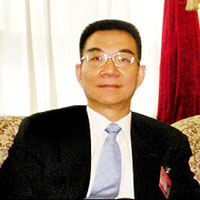
Lin Yifu |
The policy reflects the government's determination to solve problems related to farmers, and the development of agriculture and rural areas. Urban development has been the main beneficiary of China's new policies on reform and opening up to the outside world launched in the late 1970s, and particularly so during the mid-1980s. The resultant effect has been a continually increasing gap between urban and rural situations.
The government is now trying to narrow that development gap.
The "building a new socialist countryside" concept is one of the major issues currently under discussion by the National Committee of the Chinese People's Political Consultative Conference (CPPCC), China's top advisory body, which is meeting for its annual session in Beijing.
Dr. Lin Yifu, director of the China Center for Economic Research of Peking University and a CPPCC member, has been researching rural development in China for many years. According to him, the idea of "building a new socialist countryside" was actually proposed six years ago.
"As an economist devoted to rural development, I am happy to see that this concept has been written into the 11th Five-Year Guidelines. Two important documents were issued in 2004 and 2005 respectively, which focused on increasing farmer's income and improving the comprehensive production ability of farmers. This new document is not only a continuation of that strategy, but it takes a bigger step forward by setting a scientific development goal in the rural areas with more concrete measures," Lin said.
He emphasized the urgency of guaranteeing financial support to the project. Current financial support for the rural areas is lacking because of the "few available channels." Rural areas are still largely dependent on loans from the Rural Credit Cooperatives.
Lin said, "It's widely acknowledged by researchers of rural policies that financial support is needed for farmers to develop their production output and ultimately increase their incomes. Although some policies have been issued to make it easier for farmers to obtain loans, many financial organizations are still reluctant to give loans because of the risks involved, primarily the lack of guarantees. In order to change this situation, we need to explore a scientific and market-oriented way of financing farmers and realize the industrialization of agriculture."
"For example, we have suggested that large companies set up guarantee companies to serve as guarantors for farmers. From the banks' point of view, giving a loan to a farmer backed by a corporate guarantor reduces much of the risk. At the same time, these companies have the opportunity to expand their production base."
He added: "According to our field investigation research, the large companies can effectively organize farmers into individual production bases. A production base cycle would work like this: The farmers get their seeds from the companies. During the production procedure, the companies provide technical support to the farmers. The farmers sell their products to the companies, who then sell them on the open market. It's a symbiotic relationship."
"The National Development and Reform Commission is considering our suggestion seriously and has conducted field investigations in four provinces and cities as part of a feasibility study. They've also invited me to discuss the suggestion with them in more depth. Some banks have also shown strong interest, saying they would like to take part in the trial projects," Lin said.
With regard to surplus labor in the rural areas, Lin said: "Transferring that surplus labor is an important way of increasing farmers' incomes. However, the labor transfer should not become a headache for cities either. The most important thing is to expand employment opportunities. More attention should be paid to developing labor-intensive organizations, especially small and medium enterprises.
"Some people ask me how long the process of 'building a new socialist countryside' will take. My understanding is that this is a long-term goal which will continue to be updated and expanded," Lin added.
Profile of Lin Yifu
Born in 1952 in Taiwan, Lin Yifu came to Beijing in 1978. He obtained his Masters degree from Peking University in 1982, and then left for the US for further studies on agricultural economy at the University of Chicago, where he earned his PhD.
Lin devoted himself to the work of the State Council's Rural Development Research Center when he returned to China. In 1994, he founded the China Center for Economic Research at Peking University.
|