|
Full Coverages>China>Premier on Foreign Visit | |
|
|
|
|
|
|
|
|
|
|
|||||||||||||||||
|
|
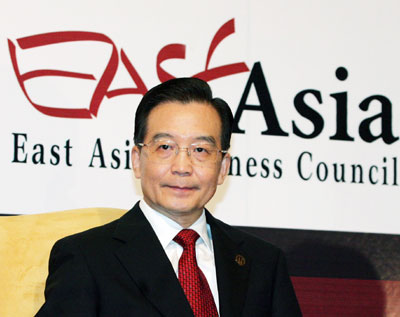
Wen: China's growth an opportunity for E. Asia
China's economic development not only benefits its 1.3 billion people, but also provides more opportunities for other East Asian countries, Chinese Premier Wen Jiabao said in Kuala Lumpur on Monday. In his speech to the East Asia Summit Leaders Dialogue -- "China's Peaceful Development: An Opportunity for East Asia," Wen said that with import growing by an average annual rate of over 15 percent in recent years, China ranks the world's third largest and Asia's largest importer.
Overseas investment by Chinese companies has also registered an annual growth of over 20 percent, with 80 percent made in Asia. As Chinese companies continue to expand in business, China will contribute more significantly to Asia's economic growth, he said. China is committed to maintaining Asia's financial stability. Back in the 1997 financial crisis, China resisted pressure to devalue its currency, thus contributing to Asia's economic stability, Wen noted. Over a decade ago, China set itself the goal for reforming the renminbi exchange rate regime, namely, establishing a managed floating exchange rate regime based on market supply and demand. China has since then worked to pursue this goal by improving the renminbi exchange rate regime, he said. China took a crucial step in reforming the renminbi exchange rate regime last July. Instead of pegging the renminbi to just the US dollar, China adopted a managed floating exchange rate regime based on market supply and demand under which the renminbi is adjusted with reference to a basket of currencies, and the exchange rate was also properly adjusted and floated, he added. In introducing this reform and adjustment, China has taken into consideration both its own economic and financial stability and the impact of such reform and adjustment on the economic and financial stability of China's neighbors, the whole region and the world at large, Wen said. China will also take an active part in energy cooperation on the basis of mutual benefit, Wen said, adding that China is ready to strengthen energy dialogue and cooperation with other countries to ensure global energy security and stability. Being both a major energy producer and a major energy consumer, China meets over 90 percent of its overall energy demand with domestic supply, and will adhere to the policy of meeting its energy need mainly through domestic supply, he said. China will promote both energy development and energy conservation, and give top priority to energy conservation, Wen said, adding: "Our goal is to cut the use of energy per unit of the GDP by about 20 percent by 2010, and achieve energy conservation and efficiency for the whole country." |
|
|
|
|||||||||||||||
|
|
|
|
|||||||||||||||||