|
Home>News Center>World | |
|
|
|
|
|
|
|
|
|
|
||||||||||||||||||||||||||||||||||||||||||||||||||||||||||||||||||||||||||||||||||||||
|
|
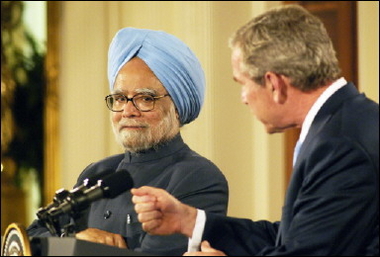
Concerns voiced over US-India nuclear agreement NUCLEAR AMBITIONS It could also complicate efforts to pressure Iran and North Korea into forsaking their nuclear arms ambitions. While improved relations with India are desirable, "it's unfortunate they picked the nuclear area and the missile/space areas in which to do this because it really erodes certain fundamental principles," said Leonard Spector of the Monterey Institute's Center for Nonproliferation Studies.
U.S. officials dismissed comparisons with Iran, saying Tehran had long cheated on its nuclear weapons activities, while India had been open and convinced Washington it wanted to curb proliferation. George Perkovich, another South Asia expert with Carnegie, said Bush's initiative could be complicated to implement. "India has been a responsible steward of nuclear technology ..." so if key states in the existing nonproliferation system agree to adapt the rules as Bush recommends, "this should be acceptable," he told Reuters. "The problem is, if the United States ... races ahead without obtaining the consent of other key states, then the risk is that the system of nonproliferation rules can begin to collapse," Perkovich said. Under the 1970 NPT, only the United States, Britain, France, China and Russia may have nuclear weapons. Some 182 other signatories gave them up in return for access to peaceful nuclear energy. India and Pakistan never signed the treaty. While ties with Pakistan have also vastly improved since Sept. 11, 2001, Washington is much more wary of Islambad's nuclear activities especially after a former government official, Abdul Qadeer Khan, was discovered running a nuclear black market that sold to Iran, Libya and North Korea. Tellis said the administration realized that India, offering America a lucrative market, posed no threat but would never give up nuclear arms if China and Pakistan retained them.
|
|
|
|
|
|||||||||||||||||||||||||||||||||||||||||||||||||||||||||||||||||||||||||||||||||||
|
|
|
|
||||||||||||||||||||||||||||||||||||||||||||||||||||||||||||||||||||||||||||||||||||||