|
Home>News Center>Bizchina | |
|
|
|
|
|
|
|
|
|
|
|||||||||||||||||||||||
|
|
China to safeguard millions of textile jobs
In a move to safeguard thousands of jobs, China declared it will scrap - after only 10 days - its sharply increased export duties on Chinese-made textiles.
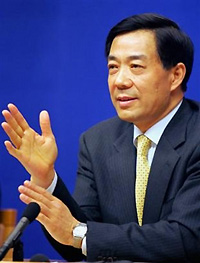
Minister of Commerce Bo Xilai told a news briefing yesterday that export tariffs on 81 categories of textile products will be lifted, including the 74 for which 400 per cent increases were announced. The latest restrictions imposed by the US side will affect US$2 billion worth of Chinese exports and 160,000 jobs, while the EU action will lead to a loss of US$300 million exports and corresponding jobs. "Behind each category of product in question, some 1,000 to 6,000 Chinese enterprises would feel the pinch," Bo said. "We have to make corresponding policy adjustment since the EU and the US have set controls on Chinese textile exports," said Bo. "We must be fair to Chinese producers." To ease the concerns of trade partners, the Finance Ministry unveiled on May 20 a staggering 400 per cent increase on export tariffs on 74 classes of products starting on June 1. Such products registered a sharp rise in exports in EU and US markets in the first few months of this year after decades-old global textile quotas were abolished on January 1. Experts said there would be no sharp rise in exports if US and EU had taken a step-by-step approach to abolishing the quotas. Bo said he had hoped the earlier announcement of steep tariff rises would help ease concerns of trading partners, but "it is a pity that both the EU and the US failed to accept the policy." The China Textile Import and Export Chamber of Commerce said the adjustment will help ease the burden on Chinese enterprises, which are already operating on razor-thin profit margins. However, Bo warned enterprises to prepare for further restrictive measures and adapt to a new international trade environment. Bo said he had noted that some domestic enterprises, under great pressure from the restrictive moves, were calling for retaliation measures, but he ruled out the possibility of a trade war. "We do not want to see a trade war," he said. "I do not believe retaliation to be the only way (forward) for us. A healthy trade relationship is good for both sides," he added. Although Bo stressed that China still hopes to solve the textile row through consultation, he said China reserves the right to resort to the World Trade Organization (WTO) to adjudicate the dispute since controlling measures not only violate WTO principles, but are also prejudicial against China. "We have the right to submit the case to WTO. Whether we will resort to the WTO, and when, is completely up to the Chinese side," he said. The EU decided last Friday to put the dispute to the WTO and attempted to launch safeguard measures on two categories of Chinese textiles-T-shirts and flax yarn-while Washington has begun imposing measures aimed at capping growth of cotton trousers, cotton-knit shirts and underwear. Further talks Bo stressed the importance of further dialogues with the US and EU to solve the dispute. Vice-Minister of Commerce Ma Xiuhong is in currently in the US to negotiate while Vice-Minister Gao Hucheng has just concluded a tour to the EU. Although no details of Gao's negotiations were disclosed, an EU trade official told a group of Chinese reporters last week in Brussels that the consultation is very likely to produce an allowed annual growth rate for Chinese textile exports. EC hopes EU Trade Commissioner Peter Mandelson also said earlier the EU will not introduce a quota system. The European Commission, the executive arm of the European Union, said yesterday that it still hopes to reach an amicable deal with China to solve the current textile disputes. "We still keep our willingness to seek an agreement with China on textiles," European Commission spokeswoman Claude Veron-Reville told Xinhua News Agency in Brussels.
(China Daily 05/31/2005 page1) |
|
|
|
|
||||||||||||||||||||
|
|
|
|
|||||||||||||||||||||||