|
Home>News Center>China | |
|
|
|
|
|
|
|
|
|
|
||||||||||||||||||||||||||||||||||||||||||||||||||||||||||||||||||||||||||||||||||||||||||||||||||||||||||||
|
|
Does SARS virus still exist in the wild?
Does the SARS (severe acute respiratory syndrome) virus still exist in the wild? Where will it come from if an epidemic breaks out again? Experts are still arguing these questions.
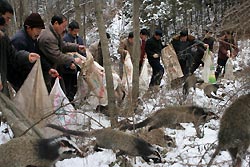
However, experts from China, where the epidemic first broke out, say it is too optimistic to say that now, since scientists still do not really know the real source of the virus. Scientists are confident that SARS no longer exists in the wild and has essentially disappeared as a threat, said Kathryn Holmes, a professor of Microbiology at the University of Colorado. The epidemic strain has not been seen in nature since June 2003, she said at the American Association for the Advancement of Science conference early this week, The Times reported. She also said that China's Himalayan palm civets, thought to be the most likely source of the SARS virus, have been wrongly blamed, and do not harbour the epidemic strain. For SARS to return as a threat, it would have to evolve again from scratch or be released in a laboratory accident or bio-terror attack, she said. "It is too early to say that the corona virus, which caused the SARS epidemic, does not exist in the wild any longer because up to now experts still failed to find the origin of the virus at all," said Liu Qiyong. Liu, a leading expert from Chinese Centre for Disease Control and Prevention, has continued doing research on the SARS source around China since the outbreak of the epidemic in 2003. He said that people cannot say the virus has been eradicated only because "we have not found it." Liu added that he and his group have found the same SARS virus in Himalayan palm civets and many other wild animals since early 2004. However, Liu admitted that he has failed to find the virus in any wild animals since June 2004. No evidence can fully prove that the palm civet is the source of the virus, and it only played a role of an "amplifier," which is susceptive for the SARS virus and made it spread wider, Liu said. SARS still exists "out there" - probably still in a species of wild animals (not just the civet) - and could therefore "resurface" at any time, said Roy Wadia, World Health Organization spokesman in Beijing. He recalled the Ebola virus, which emerged out of "nowhere" in central Africa, and claimed many lives, only to "vanish" again for several years before re-emerging later. Although arguments continue, experts all agree that, if SARS were to re-occur, it could be contained quickly because several vaccines against it have been developed, along with better treatment methods and prevention experiences. Biosafety standards at laboratories that carry out work on the SARS corona virus need to be strengthened not only in China but around the world, said Wadia. "We still do not have a SARS vaccine for the general population, although trials are going on in China and the United States," said Wadia. "SARS can still pose a threat, and should be taken very seriously," he noted.
(China Daily 02/23/2005 page2) |
|
|
|
|
|||||||||||||||||||||||||||||||||||||||||||||||||||||||||||||||||||||||||||||||||||||||||||||||||||||||||
|
|
|
|
||||||||||||||||||||||||||||||||||||||||||||||||||||||||||||||||||||||||||||||||||||||||||||||||||||||||||||