|
Home>News Center>World | |
|
|
|
|
|
|
|
|
|
|
||||||||||||||||||||||||||||||||||||||||||||||||||
|
|
Four die in steam leak at Japan nuclear plant
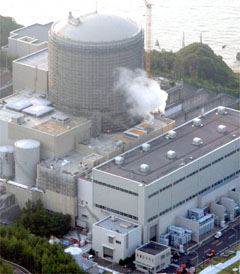
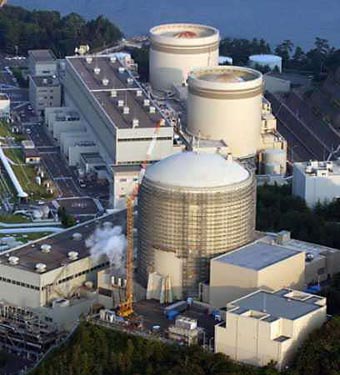
A leak of high-pressure steam at a Japanese nuclear power plant killed four workers on Monday but authorities said no radiation escaped in the accident, which took place on the anniversary of the 1945 atomic bombing of Nagasaki.
"Radioactive materials weren't contained in the steam that leaked out...there is no impact from radiation on the surrounding environment," an official from the Nuclear and Industrial Safety Agency (NISA) told a news conference.
Police initially said five workers had been scalded to death when a pipe burst, but later corrected the figure to four.
Seven others were injured, three seriously, officials said.
The accident occurred in a building housing turbines for the Number 3 reactor at the Mihama nuclear plant in Fukui prefecture, 320 km (200 miles) west of Tokyo.
"Staff rushed in screaming," said a woman who was working in the plant's canteen. "I put in a container all the ice I could find and gave it," she told Kyodo news agency.
The temperature of the leaking steam would have been about 142 degrees Celsius (288 Fahrenheit), experts said.
Kansai Electric said there were no plans to shut any other of its plants for checks.
The workers involved, who were preparing to shut down the plant for maintenance anyway, were all contractors. Officials said 221 people were in the building at the time of the rupture.
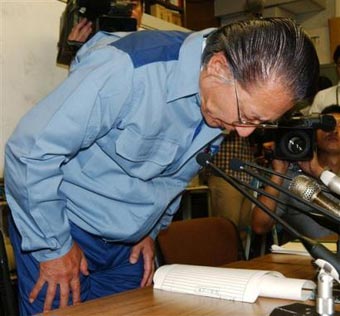
"We are now investigating the cause," Kansai Electric spokesman Ikuo Morinaka told a news conference.
The Mihama plant was the first nuclear plant built by Kansai Electric. The No. 1 reactor began service in November 1970.
OTHER INCIDENTS
A NISA official said a 600 millimeter (24 inch) hole had been found in a pipe that feeds steam into the turbine.
A trade ministry spokesman said there was no technical problem with the nuclear reactor's core at the plant.
TEPCO was forced to close all its 17 nuclear power plants temporarily by April 2003 after admitting it had falsified safety documents for more than a decade. The revelations severely undermined public confidence in the nuclear industry and a number of towns in Japan have held referendums in the past few years and voted against construction of more nuclear plants. Later on Monday, a garbage disposal site at a nuclear power plant in Shimane prefecture, western Japan, caught fire but was quickly extinguished, Chugoku Electric Power Company said. Prime Minister Junichiro Koizumi told reporters he did not have details of the Mihama incident. "But I think we must do our best to investigate the cause, prevent a repeat and to implement safety measures." The only previous fatal accident at a Japanese nuclear power plant was in 1967, in a fire at a plant in Ibaraki prefecture just north of Tokyo. There was no radiation leak. The worst previous incident at a nuclear facility was at a uranium processing plant in Tokaimura, a town north of Tokyo. That took place on September 30, 1999, when an uncontrolled nuclear chain reaction was triggered after three poorly trained workers used buckets to mix nuclear fuel in a tub. The resulting release of radiation killed two workers and forced the evacuation of thousands of nearby residents. The latest incidents come as oil prices are hitting record highs. Japan imports all of its oil, most from the Middle East. A Tokyo-based oil trader said it was unlikely the shutdown of the plant, which was planned anyway, would have an impact on oil demand or prices because Kansai tended to use liquefied natural gas as an alternative fuel when its nuclear plants were off-line. "I think the impact (on the oil market) will be small," the trader said. |
|
|
|
|
|||||||||||||||||||||||||||||||||||||||||||||||
|
|
|
|
||||||||||||||||||||||||||||||||||||||||||||||||||