|
Home>News Center>China | |
|
|
|
|
|
|
|
|
|
|
||||||||||||||||||||||||||||||||||||||||||||||||
|
|
Modern technology helps survey imperial tomb
Archaeologists at one of China's most significant archaeological sites are learning more by digging less. Scientists prospecting the relics under the Mausoleum of the First Emperor of the Qin Dynasty (221-207 BC) are using advanced technology to protect buried relics.
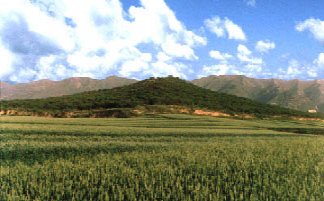
"Instead of surveying underground relics by applying long and narrow shovels, we use remote sensing technology to investigate the covered relics," said archaeologist Duan Qingbo. "The methods indicates the time for large scale harmless dig for covered relics under the Qin emperor's tomb," said Duan, who works with the Shaanxi Provincial Archaeology Research Institute and is head of the archaeological team at the tomb. The ruins around the tomb are about 60 square kilometres. There are more than 600 remains and some 50,000 relics have been unearthed. "The tomb is in front of the mountain and covered with a large amount of sand and stones placed here by floods in the last 2,000 years," he said. "There are also villages, factories and schools with more than 6,000 people living in the tomb area. So it is very difficult to survey the area with traditional methods." The site can not be properly protected without a clear understanding of what is buried in the area. Archaeologists estimate that it would take some 200 years, using traditional methods, to survey the entire area. So, in 2002, the Ministry of Science and Technology developed a plan to use remote sensing technology. "In 2003, the remote sensing survey made a number of great discoveries, which showed us the exact location, size and depth of the underground palace of the mausoleum. "We learnt much about the palace's building materials, inner structures, drainage system and walls around it." The result was a more thorough understanding of what was underground without doing any actual digging. "It has great significance for ancient relics and ruin research and protection, especially for ancient ruins and tombs which are not suitable to be excavated at present," Duan said. With further development, remote sensing survey technology will play a more important role in research and investigation on the Qin tomb area. Combined with traditional measures which provide exact and detailed information, Chinese archaeologists will get a complete picture of the tomb in the near future, Duan said. The mausoleum is located some 20 kilometres east of Xi'an, capital of Northwest China's Shaanxi Province. The Qin Terra-cotta Warriors and Horses Museum is nearby. It is one of the most important national protection units and one of the most popular tourism destinations in China. |
|
|
|
|
|||||||||||||||||||||||||||||||||||||||||||||
|
|
|
|
||||||||||||||||||||||||||||||||||||||||||||||||