|
Home>News Center>China | |
|
|
|
|
|
|
|
|
|
|
|||||||||||||||||||||||||||||||||||||||||||||||||||||||||||||||||||||||||||||||||||||||||||||||||||
|
|
Rocket blasts small satellites into space
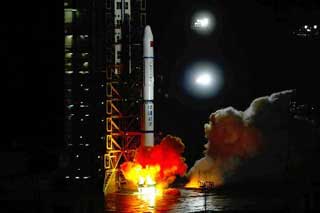
A mini-satellite and a micro-satellite, both for experimental purposes, blasted off atop a Long March rocket from Southwest China's Sichuan Province just before midnight last night.
"Experimental Satellite I," a minisat weighing 204 kilograms, blasted off into space at 11:59 pm aboard a Long March 2C rocket from the centre, said the spokesman. A microsat, the 25-kilogram "Nano-satellite I," was also launched piggyback-style on the rocket, the spokesman said. Twelve minutes after the rocket lifted off, "Experimental Satellite I" entered into its preset sun-synchronous orbit, which is 597 kilometres above the Earth. In about 30 seconds, the nano-satellite had also reached the sun's orbit, around 596 kilometres from Earth, according to reports from the Xi'an Satellite Monitoring Centre in Northwest China's Shaanxi Province. Micro-satellites are satellites lighter than 100 kilograms, while a mini-satellite is usually one weighing between 100 kilograms and a half ton, according to aerospace conventions. These new types of satellites, based on micro-electronic technology, are known for their high quality, low costs, and the shorter amounts of time needed for research and manufacturing, space experts said. "Experimental Satellite I" was developed by the Harbin Institute of Technology in Heilongjiang Province, the China Aerospace Science and Technology Corp in Beijing, and two other partner institutes. The pioneering satellite involved a wealth of advanced mini-satellite expertise, and has "blazed a new trail in terms of developing China's mini-satellite technology," the spokesman said. The China Remote Sensing Satellite Ground Station under the Chinese Academy of Sciences will use the mini-satellite for land resource photogrammetry, geographic environmental monitoring and surveying and mapping experiments, he said. "Nano-satellite I" was developed, and will be used by the Tsinghua University and the Aerospace Tsinghua Satellite Technology Co in Beijing. By launching such an experimental nano-satellite, Chinese scientists hope to develop a nano-satellite platform, according to the spokesman. He said that China has made headway in the field of small satellites. It is now capable of developing satellites weighing 25 kilograms and beyond. |
|
|
|
|
||||||||||||||||||||||||||||||||||||||||||||||||||||||||||||||||||||||||||||||||||||||||||||||||
|
|
|
|
|||||||||||||||||||||||||||||||||||||||||||||||||||||||||||||||||||||||||||||||||||||||||||||||||||