

| .contact us |.about us | |
|


|
|
|
|
|||||
|
|
|
|
|||||
 |
||
|
|
|
|
|
|
|
||
|
|
|
|
|
| Advertisement | ||||||||||||||||||||||||||||||||||||||||||||||||||||||||||||||||||||
|
Bush seeks to probe Iraq intelligence failures ( 2004-02-02 09:03) (Agencies) U.S. President George W. Bush, under mounting political pressure, will sign an executive order to establish a full-blown investigation of U.S. intelligence failures in Iraq, a senior White House official said Sunday.
The investigation will look at what the United States believed it knew before the war against Saddam Hussein's regime and what has been determined since the invasion. Former chief weapons inspector David Kay has concluded that Iraq did not possess weapons of mass destruction, a chief rationale for the U.S.-led war.
Lawmakers from both parties say America's credibility has been undermined by uncertainty over flawed intelligence that led the United States into war in Iraq. Republicans joined Democrats in calling for an investigation.
"I don't see there's any way around it," Sen. Chuck Hagel, R-Neb., a senior member of the Senate Foreign Relations Committee, said Sunday on CNN's "Late Edition."
"We need to open this up in a very nonpartisan, outside commission, to see where we are," Hagel said. The issue is not just shortcomings of U.S. intelligence, he said, but "the credibility of who we are around the world and the trust of our government and our leaders."
Sen. Trent Lott of Mississippi, another top Republican on the committee, told "Fox News Sunday" that he may be willing to go along with an independent commission because "I think we have major problems with our intelligence community. I think we need to take a look at a complete overhaul."
Asked by CNN whether it was time for such a commission, Sen. Joe Lieberman, D-Conn., replied: "Absolutely."
By setting up the investigation himself, Bush will have greater control over its membership and mandate. The senior White House official said it would be patterned after the Warren Commission, so named for its chairman Earl Warren, a former chief justice of the Supreme Court, which led a 10-month investigation that concluded in 1964 that Lee Harvey Oswald acted alone in killing President John F. Kennedy.
In appointing the members, Bush will draw heavily from intelligence experts who are familiar with the problems in the field, the White House official said, speaking on condition of anonymity. The investigation will be independent and be provided with the resources it needs to do its job, the official said.
Its mandate will be broader than simply what went wrong in Iraq, the official said. It also will look into issues such as gathering intelligence on stateless regimes, such as al-Qaida, and weapons proliferation.
At this point, the White House has not decided on a deadline for the investigation — a sensitive issue since its findings could become an issue in the presidential campaign which will be decided with the election in November.
There was no indication when Bush would sign the order creating the panel.
Bush's decision comes amid assertions that America's credibility is being undermined by uncertainty over flawed intelligence that led the nation into war in Iraq.
The White House official said the investigation's members will be "distinguished citizens who have served their country in the past."
White House lawyers working on the structure of a commission settled on the pattern of the Warren Commission, which was created by President Johnson.
David Albright, a former weapons inspector, said the administration could use the commission as a way to delay judgments about the intelligence community and the administration's use of the intelligence information.
"The bottom line for them (the Bush administration) is to delay the day of reckoning about their use of the weapons of mass destruction information," Albright said. "David Kay can blame the CIA and say `Oh, I made all these comments based on what I heard from the intelligence community.' President Bush can't do that. He's the boss." Albright said he disagreed with anyone who claims the president is blameless, or that anyone who had the intelligence at Bush's disposal would have reached the conclusion that war was warranted. "I was so involved in the whole debate (over weapons of mass destruction) and it's just not true," he said. In London, Prime Minister Tony Blair's office was "aware" of the U.S. position, a spokesman said, speaking on customary condition of anonymity. Regarding the possibility of a similar independent inquiry in Britain, he restated the government's position that "the Iraq Survey Group needs to continue its work." Despite months of searching, U.S. inspectors have found no banned weapons in Iraq. Bush cited the presence of such weapons as a rationale for the war. Kay, former chief U.S. weapons inspector in Iraq, has said that the administration's intelligence on Iraq was "almost all wrong." Flawed intelligence about deposed Iraqi President Saddam Hussein's weapons program undercuts the Bush administration's policy of pre-emption, striking first if U.S. interests are deemed to be under threat, Kay said, also on Fox. Until it's clear how prewar intelligence about Iraq's weapons ended up being inaccurate, the public will be dubious of government claims that Iran or North Korea, the other two members with Iraq of Bush's "axis of evil," pose grave dangers, he said. "I think most of us would have greater doubts," Kay said. "I would hope even the president would have greater doubts until we understand the fundamental causes" of the misleading intelligence. "If you cannot rely on good, accurate intelligence that is credible to the American people and to others abroad, you certainly cannot have a policy of pre-emption," Kay said. Sen. Joseph Biden, D-Del., agreed. "America's credibility's at stake," Biden told CNN. "This isn't about politics anymore."
|
|
 |
||||||||||||||||||||||||||||||||||||||||||||||||||||||||||||||||||
| .contact us |.about us | ||||||||||||||||||||||||||||||||||||||||||||||||||||||||||||||||||||
|
|
|
|
|
|
|
|
| Copyright By chinadaily.com.cn. All rights reserved |
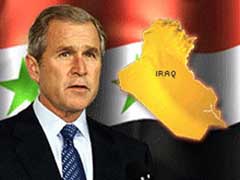 The investigation will examine not only Iraq but also
intelligence issues dealing with stateless groups such as terrorists and
secretive regimes such as North Korea, the official said, insisting on
anonymity. Given the broad mandate of the investigation, it is not likely to be
completed before the November elections. Bush had resisted an investigation of
Iraq intelligence but agreed to an inquiry amid growing pressure.
The investigation will examine not only Iraq but also
intelligence issues dealing with stateless groups such as terrorists and
secretive regimes such as North Korea, the official said, insisting on
anonymity. Given the broad mandate of the investigation, it is not likely to be
completed before the November elections. Bush had resisted an investigation of
Iraq intelligence but agreed to an inquiry amid growing pressure.
