A brief history of China's dragon paintings


 |
|
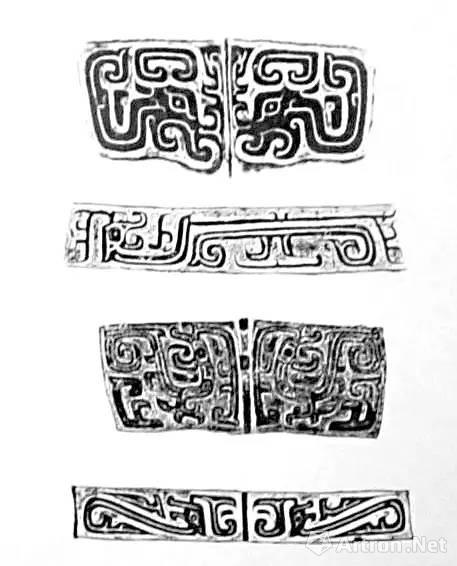
Dragon-shaped patterns on bronze wares from different periods. [Photo/Artron.net] |
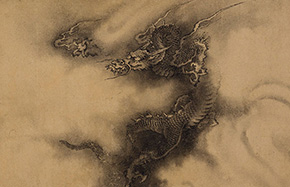
Ink brush painting Six Dragons by Song Dynasty (960-1279) painter Chen Rong fetched $49 million at a New York auction not long ago, attracting the public's attention to dragon paintings.
Since ancient times, the dragon has been a symbol of imperial power, and its image has been portrayed in many paintings, as well as on bronze wares, copper mirrors, jade wares, porcelain and stone carvings.
Before the Han Dynasty (206 BC-AD 220), images of dragons in artworks were fairly abstract and mysterious-looking. It wasn't until the Song Dynasty that the dragon became a more concrete and vivid creature. One ancient book describes the dragon as "its horn resembles a deer, its head resembles a camel, its eyes resemble a ghost, its neck resembles a snake, its belly resembles a sea monster, its scales resembles a carp, its claws resemble an eagle, its palms resemble a tiger and its ears resemble a cow".
During the Song Dynasty, artists began to specialize in drawing dragons, such as Dong Yu, Wang Xiandao and Wu Huai from the Northern Song Dynasty (960-1127), and Chen Rong, Ai Shu, Seng Fachang from the Southern Song Dynasty (1127-1279). Among them, Chen Rong was the most famous.
The Southern Song Dynasty marks a transition in dragon painting history in China. Due to scholars' concerns about the nation during this period, they began to use the dragon, which is a symbol of the Chinese nation, as a vehicle to vent their emotions. They expressed their lofty ideals and spiritual pursuit through the imposing posture of dragon in paintings. Since then, dragon paintings that used to be done for the royal court, became a way to express personal emotion and ethnic sentiment.
It is said that Chen Rong always painted when drunk, and sometimes he just poured ink as clouds, sprayed water as fog, and smeared ink on paper with his scarf.