Artist Li Lei brings his visual symphony to Beijing


 |
|
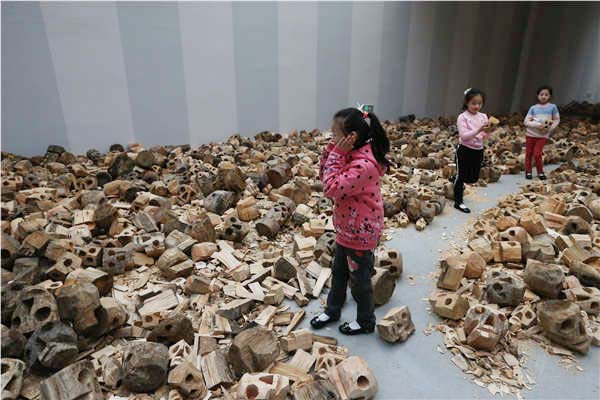
Li Lei is holding his solo show, The Apsara's Flowers, at Minsheng Art Museum Beijing. Photos Provided To China Daily |
Shanghai-based artist Li Lei says that lately he has been listening to Sergei Rachmaninoff's Piano Concerto No 2. He is "moved to tears" each time he hears the late Russian composer's piece.
"He was a master at controlling the emotions of listeners. He arranged the notes accordingly, like deploying forces in warfare. And he made musical instruments encounter as well as enhance each other, like performers in a play," says Li, who is also the deputy director of Shanghai's China Art Museum.
The 52-year-old hopes his own works - paintings, sculptures, installations and poems - can also reflect individuality and act as a narrator of stories. And when they come together in a show, they will compose a dramatic visual symphony.
Li conveys this to viewers at the ongoing exhibition, The Apsara's Flowers, at the Minsheng Art Museum Beijing.
The show reviews his explorations with abstract oil paintings, sculptures and installations over the past two decades.
Li hopes the exhibition will create an "emotional friction", as he calls it, among the audience members.
"When people walk among the pieces, like watching a drama, they will build an emotional connection with the works that will evoke thoughts about life and death."
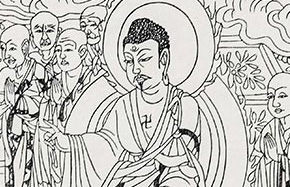
Li has borrowed the title from a story from Vimalakirti Sutra, a Buddhist teaching popular in Asia. One day, an apsara (celestial nymph) throws heavenly flowers onto Buddha and his disciples, and the flowers slip from Buddha's body and stay on his disciples' clothes.
The disciples then try to remove the flowers from their clothes but the creature asks them why. A chief disciple says it violates Buddhist commandments against wearing flowers. Then she argues that it is their dualism that betrays Buddhist laws - the flowers didn't stay on Buddha because he "doesn't have a dualistic mind".
Li says it is same with people's attitudes toward life.