 |
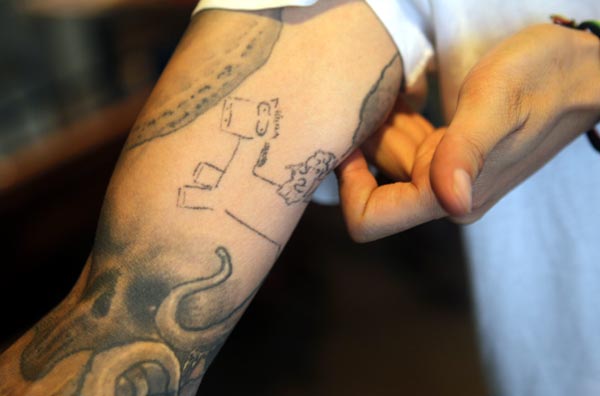
| Tattooist Dong Dong's artistic designs. Photos by Zou Hong / China Daily |
|
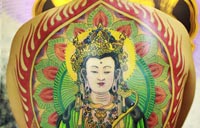 |
| Chinese rethink ink |
 |
| Marks of ethnic identity |
The nonfiction Biography of Yue Fei claims he tore open his shirt to reveal the tattoo in court after chancellor Qin Hui arrested him for treason. The court accepted the vow inscribed on his hide as proof of innocence.
Steles created by ancient Chinese Kaifang Jews in 1489, 1512 and 1663 reference Yue's tattoo.
The largely fictionalized Shuo Yue Quanzhuan (The Life of Yue Fei) says the warrior's mother used an embroidery needle, vinegar and ink to etch jingzhong baoguo, or "serve the nation with utmost loyalty", on his back at age 15 after he refused to join traitors. She etched the vow on his flesh because she worried his spirit might become less virtuous after her death.
The Ming Dynasty (1368-1644) novel The Story of King Yue Who Restored the Song Dynasty claims Yue flashed the tattoo to fellow villagers, who proposed joining criminals in the mountains when the Jurchen forces invaded.
Yue's legacy inspired many to view tattoos as heroic, rather than villainous. People began declaring their pledges on their skin.
Copyright 1995 - . All rights reserved. The content (including but not limited to text, photo, multimedia information, etc) published in this site belongs to China Daily Information Co (CDIC). Without written authorization from CDIC, such content shall not be republished or used in any form. Note: Browsers with 1024*768 or higher resolution are suggested for this site.
License for publishing multimedia online 0108263 Registration Number: 20100000002731 







 Raymond Zhou:
 Pauline D Loh:
 Hot Pot
 Eco China
 China Dream
 China Face