Everything old is new again


 |
|
[Photo/China Daily] |
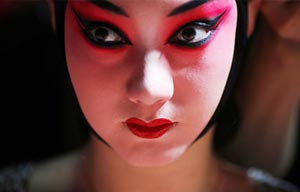
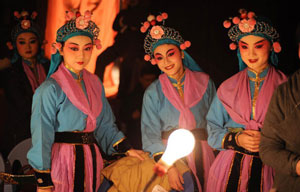
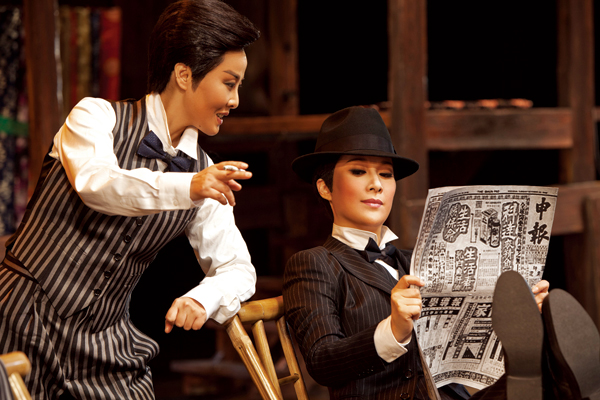
Yue is the name of the ancient kingdom that is now Zhejiang province. Yue Opera, previously translated as Shaoxing Opera - perhaps to avoid confusion with Cantonese Opera, which is also pronounced Yue Opera in Mandarin - first flourished in the 1930s when it migrated north to Shanghai.
The pioneers of this local performing art borrowed extensively from Kunqu Opera, China's oldest extant opera, and spoken plays, which are imported from the Western world. It is less stylized than Peking Opera and more natural in its expressions, hence lending itself to portrayals of love stories that are more tender than passionate. In a way, this is a reflection of the local personality.
Though all first-generation Yue Opera artists were women from rural Zhejiang, some of them displayed a keen affinity for socio-realism. The late 1940s saw a production about a country woman who suffers endless misery - contemporary with the era. The unvarnished depiction of poverty and cruelty is adapted from a Lu Xun story.
Half a century later, Mao brought another of Lu Xun's iconic stories to the stage. Kong Yiji is the ultimate loser, unsuccessful at the imperial entrance exams and failing to adapt to reality. Mao shaved her head to tackle this totally unglamorous role, at the risk of alienating her phalanx of fans. Mao is arguably the greatest innovator of her generation not only for Yue Opera but also for all traditional Chinese operas.
Giants like Mei Lanfang experimented with new repertory when Peking Opera was on the rise. Mao faces a much tougher choice: innovate or die. All Chinese opera forms are fast shrinking in audience size. Yue Opera is among the lucky few with a sizeable base, albeit elderly women for a large part.
"It's easier for me to explore new territories because our art form is only 100 years old," Mao explains. "But Peking Opera is 200 years old and Kunqu is 600 years old. They'll encounter more resistance than I would."
Related:
If you could talk to a late master in your field, who would he/she be?
Mei Lanfang.More...
She mixes her career with her life, and she has an obsession and purity about art that reminds me of Vincent van Gogh.More...
|
|
|
| Sichuan Opera |