 |
|
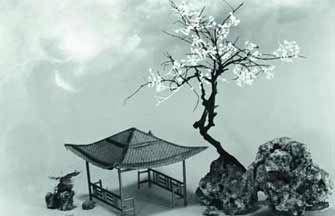
Ma Chengfu, a farmer in Guyuan, in south Ningxia, volunteers to teach students to sing hua'er, which he says is a tradition that every Hui person must cherish. Mu Qian / China Daily |
Locals in Northwest China sing hua'er, a type of traditional folk song, anytime and whenever they feel happy or sad. Mu Qian speaks to some hua'er enthusiasts on its appeal.
|
 |
|
 |
|
 |
About 10 years ago, rock musician Su Yang was inspired by a CD of blues to begin making his own music. One of his first works, however, was an adaptation of hua'er, a kind of traditional folk song from Northwest China.
"If Western musicians can turn blues to pop and rock, we can use hua'er to create contemporary Chinese music," says Su, who is from Yinchuan, capital of Ningxia Hui autonomous region. "Hua'er is a very unique and down-to-earth kind of song that has its distinct melodic patterns, structures and rhetoric systems."
In his second album, released in 2010, Su covered a traditional hua'er titled The Night Journey (Xia Ye Chuan), which tells a man's secret rendezvous with his lover.
The song begins with depictions of the scenery from the mountain to the plain, which was later disclosed to be underlining the difficulty of the meeting.
Hua'er, which literally means flower, is said to have got its name from the image of a flower symbolizing one's beloved woman.
For local people, hua'er is an important vehicle for expressing personal feelings and a popular rural entertainment.
Many hua'er songs begin with metaphoric and symbolic depictions of scenery, before developing into the real theme, which may be young love, the hard work and weariness of the farming life, and the foibles of men and women.
Su learned The Night Journey from Wang Dexian, a 73-year-old farmer who lives in Helan county near Yinchuan.
"Hua'er is very contagious, and contains folklore and the emotions of Northwestern Chinese people," Wang says. "It is like a treasure house."
Wang began to sing hua'er in childhood, when he tended the sheep grazing in the mountains. He learned it from elder shepherds who often sang hua'er to whip away loneliness or flirt with girls.
Hua'er is also called yequ or "wild tune", since it is often sung in the wild. It is actually forbidden to sing hua'er within the family or in the village in most areas, because of its erotic content.
For outsiders, hua'er is hard to understand because of the high-pitched singing, local accent and the use of many empty words.
The music is drawn from an extensive traditional repertoire named after ethnicities, towns or flowers ("Tu People's tune", "White Peony tune"), and lyrics are improvised in keeping with certain rules - for example, verses have three, four, five or six lines, each made up of a certain number of syllables.


Copyright 1995 - . All rights reserved. The content (including but not limited to text, photo, multimedia information, etc) published in this site belongs to China Daily Information Co (CDIC). Without written authorization from CDIC, such content shall not be republished or used in any form. Note: Browsers with 1024*768 or higher resolution are suggested for this site.
License for publishing multimedia online 0108263 Registration Number: 20100000002731 









 Raymond Zhou:
 Pauline D Loh: My Chinese Kitchen
 Ye Jun:
 China Face
 Hot Pot
 Eco China