Saving a Uygur music treasure
 |
|
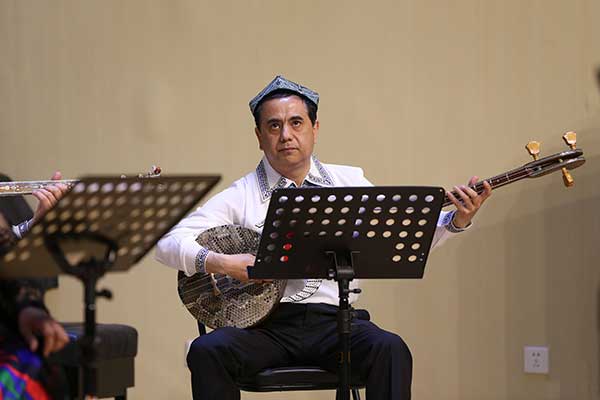
[Photo by Feng Yongbin / China Daily] |
The United Nations Educational, Scientific and Cultural Organization included Xinjiang's Uygur muqam on its Intangible Cultural Heritage list in 2005.
Abudureheman says that muqam is an Arab-Persian music tradition and shares similarities with Azerbaijani mugham, Iranian dastgah and Uzbek and Tajik shashmaqom.
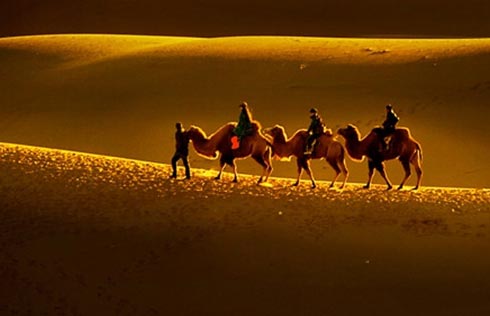
"Muqam is the result of cultural exchanges between East and West, in particular due to the Silk Road," says Abudureheman. "So, with further discussions and the sharing of information with other countries, which also have the tradition of muqam music, we will learn more about it."
Abudureheman, who was born and grew up in Urumqi, capital of Xinjiang, was introduced to music and dance at a young age as both his parents taught at the Xinjiang Arts University. Abudureheman learned muqam and a number of traditional Uygur instruments from the age of 5.
After obtaining his bachelor's degree from the Xinjiang Arts University, Abudureheman went to study in Japan and graduated with a PhD in musicology from the Tokyo University of the Arts in 2012. He then returned home to teach at the Xinjiang Arts University.
"Muqam music used to be common. At weddings, family gatherings and even ordinarily after dinner, people played muqam music - singing and dancing. Now, you can hear it only in the remote villages of Xinjiang," Abudureheman says.
"I can still recall times from my childhood when, in the spacious courtyards, public squares or houses, you were sure to find a performer of muqam. But for today's generation, it is just an art form that exists onstage."
The Xinjiang Arts University's president, Talaiti Tuerdi, says the university has remained committed to researching and preserving Xinjiang's traditional art forms since it's 1958 founding. These include muqam and meshrep (a folk tradition that involves singing, dancing, acrobatics, games and storytelling).
The university began offering a muqam major in 1996. Nearly 200 students have graduated with a bachelor's degree in the subject.
"We take students to remote villages across Xinjiang every year to collect music and learn from folk musicians," says Tuerdi.
Tuerdi also says that many traditional Xinjiang art forms were born in local houses and courtyards in particular. The outdoor spaces provide people with freedom, which inspired them to be creative.
However, with urbanization, the courtyards have been transformed into buildings, and the changed lifestyles have resulted in a decline in folk art forms.
"Though muqam is showcased by professional singers and dancers onstage now, what audiences see is just an art form produced for the stage rather than the real muqam," says Abudureheman.
"The authentic muqam exists among the people. It is not just music and dance but pure joy expressed from the heart."