 |
|
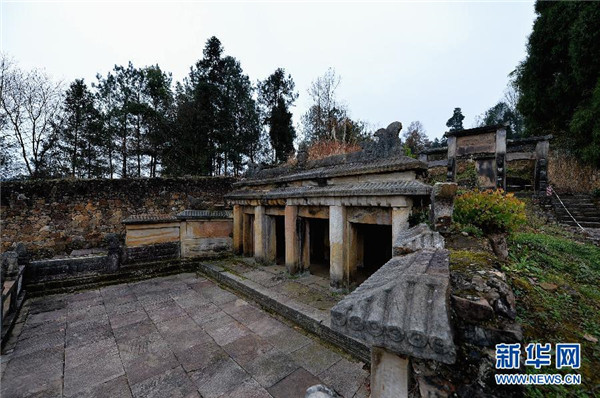
These ruins in the Tangya chieftain city are in Central China's Hubei province. [Photo/Xinhua] |
What is the Native Chieftain System of ancient China?
The Native Chieftain System was a special political system adopted by the ancient Chinese emperors to govern ethnic minority regions. It allowed local tribal leaders to inherit the official positions of the empire.
The system was practiced by the governments of the Yuan (1271-1368), Ming (1368-1644), and Qing (1644-1912) dynasties, but dates as far back as the Five Dynasties period (907-960).
The chieftain, also known as Tusi, was a tribal leader appointed as an imperial official by the central government in ancient China.
Tusi ruled their tribes on the basis of the empire's law and proprieties as well as local customs, contributing to the distinctive Tusi political and cultural tradition.
The Tusi system embodied political wisdom in handling relationships among ethnic groups in ancient China.
Copyright 1995 - . All rights reserved. The content (including but not limited to text, photo, multimedia information, etc) published in this site belongs to China Daily Information Co (CDIC). Without written authorization from CDIC, such content shall not be republished or used in any form. Note: Browsers with 1024*768 or higher resolution are suggested for this site.
License for publishing multimedia online 0108263 Registration Number: 130349 










 Raymond Zhou:
 Pauline D Loh:
 Hot Pot
 Eco China
 China Dream
 China Face