Zhang Lizhi, post graduate at School of Architecture, Tsinghua University
Why do you study ancient architecture?
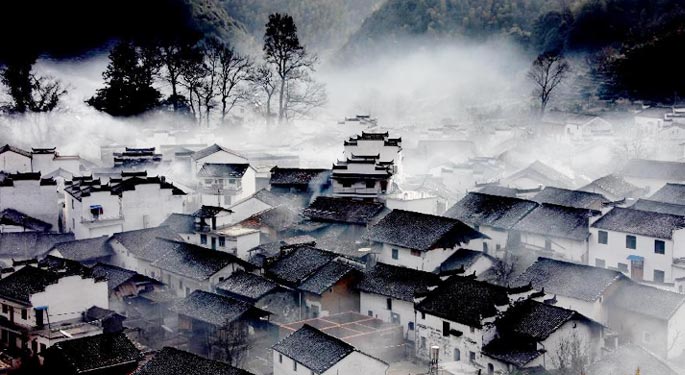
I was born in the 1980s and grew up in the city. Before I was 20 years old, I'd never gone to the rural areas. My understanding on rural areas came from the conversations I had with my father about his time there, but in reality, I felt quite apart from his memories and the experience of my parents.
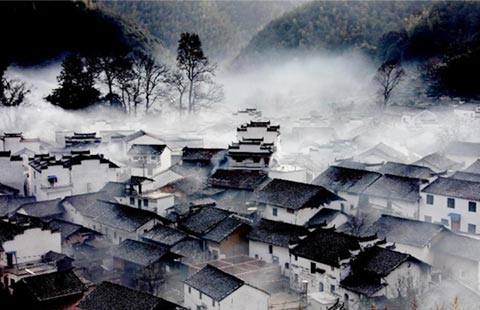
When I was 22 years old, I had a chance to study ancient architecture in a village. It was then that I realized that the way my father and my elders treat others is very similar to that of ordinary farmers. Suddenly, questions such as "Where did they come from?" and "Where did I come from?" started to occur to me. Back then, doing research in the village was a way I used to understand my elders.
I decided to pursue research in rural architecture when I was around 27 years old. I'd had a thorough understanding on modern Chinese history then and already realized that most of the problems in China's history arose in rural areas. An aspiring researcher should know about rural areas. In learning about ancient architecture, I am learning about myself, about my ancestors, about my country, and it is my way to become a "useful person".
What are the keys in protecting ancient architecture? What are some of the issues China faces?
First, the lack of research. We don't know enough about the historical and cultural values of ancient architecture so it's hard to pinpoint where and what to protect.
Second, the integration of protection and people's lives. Ancient architecture, be it in China or abroad, will degrade if there is no one living in it, no one using it and no one maintaining it. To attract locals to keep using it, ancient architecture must fulfill the needs of a modern lifestyle.
Third, the lack of professionals. Protection of ancient architecture in China relies heavily on "mock-ancient architecture construction." These teams don't work to preserve; they work to "renovate". In doing so, we lose a lot of historical and cultural values. In other words, China faces a severe shortage in professionals and professional teams in protection of cultural assets.
What is the meaning of ancient architectures? Why do we need to protect them?
If studying history could expose the "myth of modernity", then studying ancient architecture can expose the "myth of modernist architecture."
For instance, many of the problems we are troubled with today were also present in ancient times, and our ancestors solved them with a series of controllable measures. Some of these measures are still applied today, so what's ancient doesn't contradict with what's modern.
But today, people overrate "modernity" and think that things that are "modern" never existed in the past, hence they want to eliminate what's deemed "ancient." In protecting ancient architecture, we are protecting history and leaving a glimmer of hope for China's future.
Copyright 1995 - . All rights reserved. The content (including but not limited to text, photo, multimedia information, etc) published in this site belongs to China Daily Information Co (CDIC). Without written authorization from CDIC, such content shall not be republished or used in any form. Note: Browsers with 1024*768 or higher resolution are suggested for this site.
License for publishing multimedia online 0108263 Registration Number: 130349 










 Raymond Zhou:
 Pauline D Loh:
 Hot Pot
 Eco China
 China Dream
 China Face