 |
|
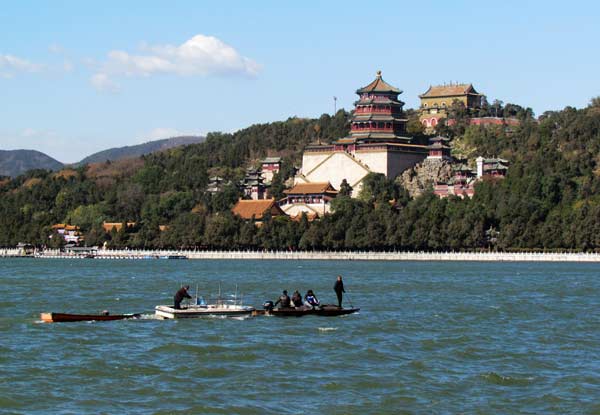
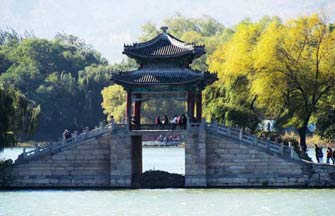
The Summer Palace in Beijing. [Photo by Bao Xinguo/Asianewsphoto] |
Test of time
Built in 1750 by the Emperor Qianlong, the Summer Palace was destroyed twice, in 1860 and 1900, by invading armies. The cash-strapped Qing rulers struggled to rebuild in 1888 and 1902. Later turmoil, including the Warlord Era (1916-1928), the anti-Japanese war (1937-1945) and the Cultural Revolution (1966-1976), wreaked havoc on the gardens, said Qin Lei, assistant director of the garden, but important artifacts in the palace were well preserved despite the turbulent times.
|
|
|
|
|
Palace Museum to offer discounted tickets from mid-September |
The palace dodged a bullet in the devastating 1976 earthquake, which killed over 200,000 people in neighboring Hebei province, thanks to proper precautions. Chen Wensheng, 79, a retired restoration technician at the garden, recalls how he and other maintenance workers were told that "there might be a strong earthquake" that year. They spent a month meticulously wrapping antiques in the warehouse with paper and fixing items in place.
"When I felt the jolt in my dormitory, I rushed to the storerooms. I was thrilled to find everything safe and sound," said Chen.
In the late 1970s, the gardens were crammed with stalls and peddlers selling drinks, snacks and shoddy souvenirs. The excessive commercialization was ended when the garden was designated a World Heritage site, Qin said.
Pressures of tourism
An influx of visitors has put enormous strain on the palace that received 265,000 tourists in 1949 and nearly 14.5 million in 2013.
Two years after the fall of the Qing Dynasty in 1912, gardens were opened to the public, but ordinary people were kept away by the high entrance fee until the establishment of New China.
"We won't close places to the public or replace antiques with replicas. Visitors must feel the charm of genuine treasures," Li Kun said.
In addition to adding simple protective devices such as glass boxes, the palace began using technology to monitor the state of the gardens and buildings in 2012. For example, 12 sensors were installed on a theater building to analyze the impact of wind, rain and earthquakes.
Similar devices monitor more than 10,000 paintings in the 728-meter Long Corridor, recording changes in color and other damage.
"Decades ago, such technology was beyond our imagination, but then we boasted a greater thing: court artisans and their apprentices," said Qin Lei, who worries about the decline of traditional techniques.
Qin claims modern restorers don't dare touch the paintings in the Long Corridor which were revamped in the 1970s, even if they need restoration now. "No one could do a better job," he said.
Qin wants the government to provide funds to help preserve traditional restoration techniques and attract more artists into the field, a practice that has proven successful abroad.
Copyright 1995 - . All rights reserved. The content (including but not limited to text, photo, multimedia information, etc) published in this site belongs to China Daily Information Co (CDIC). Without written authorization from CDIC, such content shall not be republished or used in any form. Note: Browsers with 1024*768 or higher resolution are suggested for this site.
License for publishing multimedia online 0108263 Registration Number: 20100000002731 










 Raymond Zhou:
 Pauline D Loh:
 Hot Pot
 Eco China
 China Dream
 China Face