But the museum boasts much more than Sui's remains - it is also home to many treasures unearthed from countless tombs buried under the city, a stronghold in the Spring and Autumn Period (770-476 BC) to the Han Dynasty (206 BC-AD 220).
|
|
|
|
One significant part of the collection is the silk found in a tomb from the Warring States Period (475-221 BC). In terms of variety and preservation, the silk found in the Mashan No 1 tomb gave people a big surprise.
According to workers who were on the spot in 1982 when the tomb was opened, the red and white colors on wooden figurines' faces were so vivid that they looked like they had just finished their makeup hours ago. However, they quickly started to rot once the tomb was opened.
Inside the tomb was a female corpse who was wrapped up by 35 layers of silk. Each layer was a different type of silk. Although the female corpse had decayed, the silk fabric was intact and bright in color. People call it an underground treasure house of silk.
The lightest and thinnest is a piece of gauze silk called luo. The patterns on the gauze were phoenixes and tigers. The skill to produce that kind of gauze is perhaps lost now, making the piece the only one of its kind.
Besides the silk and the corpse, the museum also has a notable collection of wooden lacquer ware. The collection accounts for 60 percent of all the wooden lacquer ware of the Chu Kingdom and Han Dynasty.
The most commonly found type of lacquer ware is a drum with two phoenixes standing on tigers. The phoenix is an emblem of the Chu people and can be found on many objects. Tigers are thought of as the king of nature as well as an emblem of their area.
Chu people had the phoenixes stand on the back of tigers to show that they were more powerful than nature and their enemy country, says Tao Ya, the museum's academic guide.
Usually, phoenixes have a pair of antlers on their backs. Milu deer were found in large numbers in this area at the time, and antlers were a metaphor for holiness, says Tao.
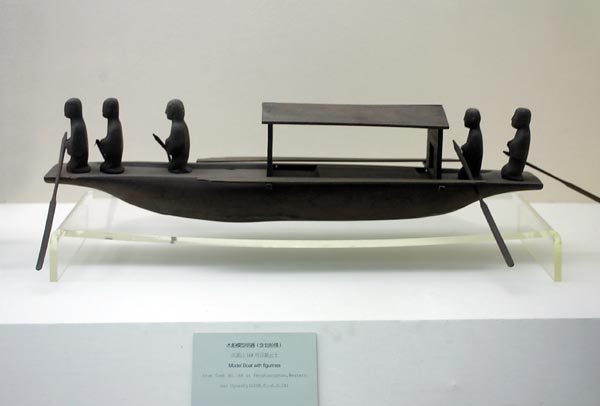
All these wooden objects were found in tombs buried deep under the soil. Their shapes were unique and they were exquisitely made. They were also symbols of the tomb occupants' social status: feudal nobles.
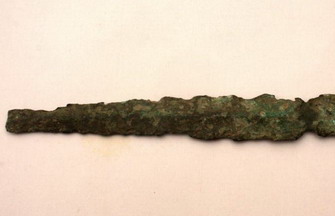
Unlike those found in other parts of China, which were mainly made of bronze, the relics in Jingzhou were made of wood to protect themselves from the high level of humidity in the area. That's also why so much wooden lacquer ware was so well preserved.
Copyright 1995 - . All rights reserved. The content (including but not limited to text, photo, multimedia information, etc) published in this site belongs to China Daily Information Co (CDIC). Without written authorization from CDIC, such content shall not be republished or used in any form. Note: Browsers with 1024*768 or higher resolution are suggested for this site.
License for publishing multimedia online 0108263 Registration Number: 20100000002731 









 Raymond Zhou:
 Pauline D Loh:
 Hot Pot
 Eco China
 China Dream
 China Face