Copycat cellphones forced out of Africa
Advertisements for Chinese smartphone brands, such as Huawei and Alcatel, are in and outside of Nairobi airport, a major gateway to Africa. Just five years ago, the adverts were for Chinese copycat cellphones, mostly from Shenzhen.
Industry insiders said that stronger awareness of intellectual property rights from both cellphone makers and local buyers is forcing the copycats out and branded products from China are leading the way in.
According to a report by Royce Funds, the penetration rate of cellphones in Africa rocketed from less than 10 percent to more than 80 percent during the past decade. Another report by international research and consultation firm IDC showed that the market share of Chinese smartphone companies in the continent increased from 15 percent in 2012 to 30 percent last year.
Yan Zhanmeng, a senior analyst at IDC China's cellphone market research department, said that Africa was one of the fastest-growing regions in the global cellphone market.
The smartphone business in Africa increased 108 percent last year, while Chinese companies saw a 30 percent growth, according to IDC.
Three Shenzhen-based brands, Huawei, Tecno and Alcatel, were among the top five performers in the market last year. Huawei ranked second after Samsung.
Yan said Africa becoming a big market for Chinese companies could be attributed to three main reasons.
"Firstly, due to the shortage of a complete cellphone industry chain, Africa does not have its own cellphone brand cluster," said Yan. "Secondly, most African people have a good impression of Chinese brands and believe in the quality of Chinese cellphones.
"In addition, the African market is open, not dominated by telecom operators, so that those cellphone makers with their own brands and distribution channels can play."
In 2007, when the first Shenzhen cellphone makers expanded their business to Africa, their products were priced between $15 and $80, according to Shenzhen Mobile Communication Association.
Today Chinese smartphones are no longer regarded as cheap products. The average price of models made by companies such as Huawei, Lenovo and Gionee is higher than $200.
Knockoffs from China were once the norm years ago.
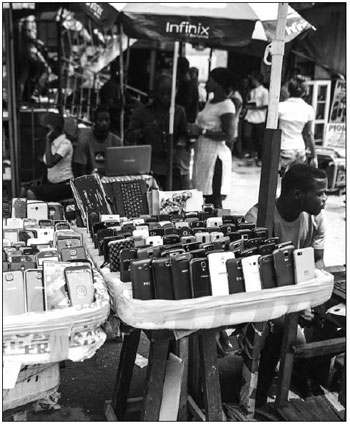
Many local merchants bought them from China and sold them back in Africa. In some countries like Ghana, there were large cellphone markets flooded with Chinese copycats, known as "Chinese cities", China Business News reported.
"Selling cellphones was like selling toys at that time. Whoever entered the market could make money," the newspaper quoted Wang Qing, an executive of a Chinese cellphone maker with business in Africa.
"But this situation is no more," he said. "There were price wars among the copycat makers, and the profit margins were pressed. Also, years of development of the market, the rise of people's brand awareness and improved IP protection have worked."
One of the most common challenges for Chinese companies is patents, said Lu Weibing, CEO of Gionee. He added that the best solution was original equipment manufacturers, or OEMs, cooperating with local brands.
He said his company has more than 10 OEM partners globally, and its market share ranked second in some African countries including Nigeria.
"We need to have an open mind to cooperate with local partners," said Lu. "In this way we cannot only promote our brands, but also withstand the risk brought about by international exchange fluctuations. It is a mutual trust and time can prove it."
zhangzhao@chinadaily.com.cn
|
Smartphones are sold at an electronic products market in the suburb of Lagos, capital of Nigeria. Provided To China Daily |
(China Daily 04/09/2015 page17)