Bian Xiaoxing will always remember the day she disentangled the body of a pregnant Tibetan antelope from a wire fence during a fieldwork trip in the Changtang Nature Reserve in Ngari prefecture in the Tibet autonomous region.
"It was May, during the Tibetan antelopes' migration period, and we set out to drive along the fence. Soon we found a dead doe hanging off the fence. The body was still warm when I touched it, and I suddenly realized that she was carrying a fawn. The express-ion on the doe's face was indescribably sad and we assumed she had struggled hard before her death. The pregnant antelope was supposed to have her new baby in a month," said Bian, project officer of the Wildlife Conservation Society in Lhasa, the capital of Tibet.
Bian and her colleagues work to improve protection of local wildlife and to prevent incidents such as this. "The fence, which was built by local residents, is intended to protect the rangeland. However, it also disrupts the lives of the wild animals, such as the antelopes, and their migration patterns," Bian said, adding that her overriding priority is to resolve the conflict between the development of the regional economy and protection of the natural world.
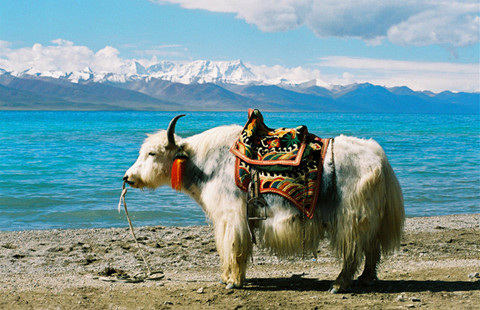
Tibet has long been a paradise for a wide range of wildlife, including endangered species such as Tibetan antelopes and Wild yaks.
The region is home to 47 nature reserves, covering a total of 412,200 square kilometers and accounting for nearly 35 percent of the land, according to Zhuang Hongxiang, deputy head of the Tibet Environmental Protection Bureau, which has helped to boost the populations of endangered species.
Statistics released by the bureau show that the number of Tibetan antelopes has risen to 200,000 from between 50,000 and 70,000 in 1995. Zhuang said the population of Black-necked cranes has risen to about 7,000 from between 1,000 and 3,000 in 1995, and the numbers of other endangered species, such as Tibetan donkeys and yaks, are also rising.
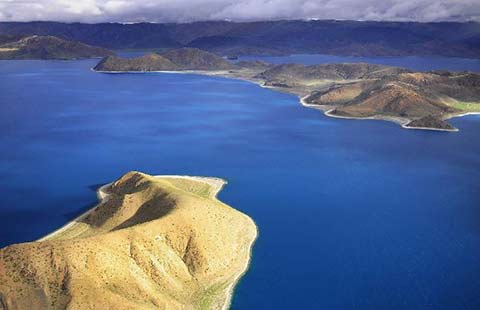
Much of the wildlife lives in the Changtang Nature Reserve in northern Tibet, which sits at an average altitude of more than 5,000 meters and covers an area of 298,000 sq km.
The reserve is the main focus for Bian and her colleagues, who cooperate with local forestry bureaus to protect the local wildlife.
During the antelopes' migration period, Bian's office cooperates with the Ngari Forestry Bureau to ensure that pregnant does can cross highways safely. They establish stations at major junctions on the migration route, and conduct patrols, check vehicles, regulate traffic flow and distribute flyers to alert drivers of their responsibilities, said Nyima Phuntsok, head of the forestry bureau.
Since last year, the bureau has dealt with six cases of poaching, arrested 17 suspects and seized 891 antelope pelts.
In 2007, the Wildlife Conservation Society first conducted thorough research into the reserve's natural resources, including studying biodiversity and geological complexity. It also conducted research into Wild yaks, signed protection agreements with local communities and trained park rangers.
"I am touched when I work with the local forestry bureaus because they make every effort to protect the nature reserve," Bian said.
Contact the writers through luowangshu@chinadaily.com.cn
Copyright 1995 - . All rights reserved. The content (including but not limited to text, photo, multimedia information, etc) published in this site belongs to China Daily Information Co (CDIC). Without written authorization from CDIC, such content shall not be republished or used in any form. Note: Browsers with 1024*768 or higher resolution are suggested for this site.
License for publishing multimedia online 0108263 Registration Number: 130349