 |
|
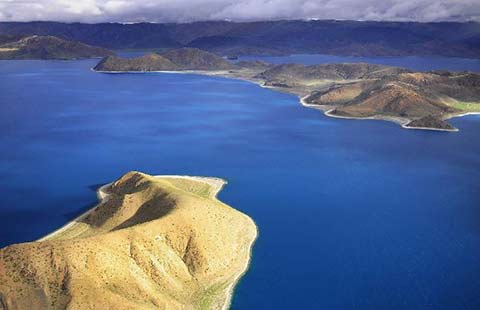
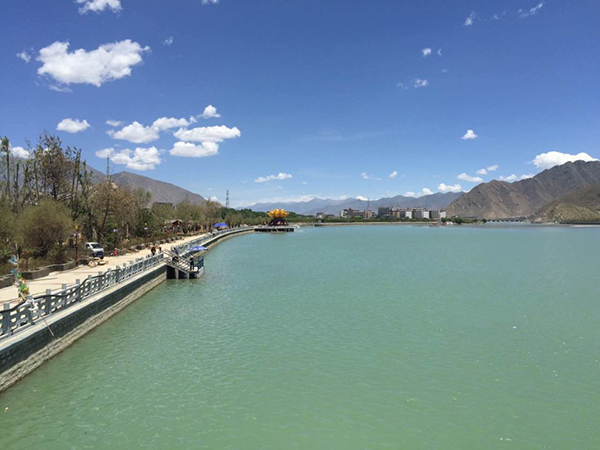
A section of the Lhasa River where Dam No 3 was built. Photo taken on July 22, 2015. [Photo/chinadaily.com.cn] |
LHASA - Sandstorm in Tibet? Sands blown up into the air from exposed riverbed of the Lhasa River in winter used to offer unpleasant experiences to both inhabitants and tourists, but a water project is solving the problem.
The 3.5 billion yuan ($620 million) project started in March 2013 with plans to build six reservoirs along a 20-kilometer-long section of the Lhasa River as it passes through Lhasa city.
The completed Dam No 3 widened the river to over 300 meters and created a water storage capacity of 1.5 million cubic meters within 3 kilometers – virtually turning the river into a lake.
Broadening the river width helps increase the air’s humidity by 10% in the city, according to Myima, the project manager of Dam No 3.
"The city of sunlight", which is at an altitude of 3,650 meters, seldom experiences much rain through the year.
The Lhasa River, a tributary of Yarlung Zangbo, used to narrow to 50 to 100 meters wide during drought season from October to May. Gales would easily blow sand up into the air from the exposed riverbed.
Myima said the dam project helped contain winter sandstorms and can control floods in summer.
"The dam gate will open for the fish to propagate in due time; therefore, it won’t pose a threat to the ecology of the river downstream," Myima said.
Construction on Dam No 2 started on May 30 this year and will include a recreation park along the bank when it’s finished at the end of 2016. The increased water storage will also provide a natural habitat for wild birds.
Dams contain sandstorms, add to quality of life
Large swaths of desert along Tibet's mother river, the Yarlung Zangpo, are now green, and trees cover formerly sandy areas that once brought late winter and early spring sandstorms to Lhasa.
In 2013, trees were planted on more than 53,600 hectares in erosion-prone areas of Lhasa, Xigaze, Shannan and Nyingchi Prefecture, mostly along the Yarlung Zangpo river, according to a Xinhua report.
Over the past three decades, the greenness of the Yarlung Zangpo basin has faded due to illegal logging by locals and overgrazing.
China started reforesting the area in 1983, while cracking down on illegal logging and setting up no-grazing zones along the river.
The improving environment also brought relief to the Lhasa Gongkar Airport in the Yarlung Zangpo river valley from sandstorms and strong winds, which have long posed a safety hazard for landing aircraft.
Statistics from the Lhasa meteorological observatory show that dusty weather affecting the airport has been reduced, as the number of dusty days at the airport dropped to 100 in 2010 from 206 in the 1980s.
Tibet's regional government plans to invest 30 billion yuan ($4.8 billion) in a forestation project to cover six major rivers, including the Yarlung Zangpo.
Workers will reforest 670,000 hectares to conserve soil and water resources, and the project is expected to be completed by 2030.
Related Stories
Copyright 1995 - . All rights reserved. The content (including but not limited to text, photo, multimedia information, etc) published in this site belongs to China Daily Information Co (CDIC). Without written authorization from CDIC, such content shall not be republished or used in any form. Note: Browsers with 1024*768 or higher resolution are suggested for this site.
License for publishing multimedia online 0108263 Registration Number: 130349