Comments
  Print
Print  Mail
Mail  Large Medium Small
1980s - Considerable progress made in Sino-Japanese relations
A "Golden Age" marked by the development of complementary interests flourished from the 1980s to the mid-1990s. Sino-Japanese relations made considerable progress in the 1980s.
On May 27, 1980, Premier Hua Guofeng visited Japan, which was the first visit ever by Chinese Premier. The two countries agreed that the Sino-Japanese government/Diet member meeting be held within the year.
On July 8, 1980, Premier Hua Guofeng attended the funeral of Japanese Prime Minister Ohira.
On December 3, 1980, the first Sino-Japanese government/Diet member meeting was held in Beijing. By June, 1987, there had been five such meetings.
On May 31, 1982, Premier Zhao Ziyang put forward, during his visit to Japan, "The Three Principles of the Sino-Japanese Relations", namely peace and friendship, equality and mutual benefit, and long-term stability.
On June 1982, the Japanese Education and Culture Ministry distorted the history of invading China through reviewing its textbooks. Thus the first textbook incident arose.
Japanese Prime Minister Zenko Suzuki said that the Sino-Japanese relations had entered into a mature period when he visited China on September 26, 1982. In regard to the textbook incident, the Japanese government would be committed to solving it as soon as possible as in the spirit of the Sino-Japanese Joint Statement.
On November 23, 1983, Hu Yaobang, General Secretary of the Communist Party of China, visited Japan. He confirmed with the Japanese Prime Minister Yasuhiro Nakasone "the Four Principles of Sino-Japanese Relations", namely peace and friendship, equality and mutual benefit, long-term stability and mutual trust. The two sides also decided to establish the "21st Century Committee for Sino-Japan Friendship".
On March 23, 1984, the Japanese Prime Minister Yasuhiro Nakasone visited China and decided to provide the second batch of Japanese government loans to China. On September 10, 1984, the first meeting of the "21st Century Committee for Sino-Japan Friendship" was held in Tokyo. About 13 such meetings have been held till now.
On September 1984, 3,000 Japanese youth visited China at the invitation of Secretary General Hu Yaobang and China National Youth League.
On April 21, 1985, Peng Zhen, Chairman of the Standing Committee of the NPC of China, visited Japan, which was the first visit ever made by the Chairman of the Standing Committee of the NPC.
On August 25, 1988, Japanese Prime Minister Noboru Takeshita visited China and committed the third batch of Japanese government loans to China.
On January 7, 1989, Emperor Hirohito of Japan passed away. On Feb 24, Foreign Minister Qian Qichen, as special envoy of President Yang Shangkun, attended the funeral.
On April 12, 1989, Chinese Premier Li Peng visited Japan. When talking about the unfortunate history between China and Japan, Emperor Akihito for the first time used the word "regret" to apologize to China.
On July 14, 1989, Japan joined in with other six West nations in imposing economic sanctions by freezing the third Japanese government loans and suspending high-level visits.
On August 27, 1989, Yoshio Sakurauchi, President of the House of the Representatives visited China.
 Press center for sessions opens in Beijing
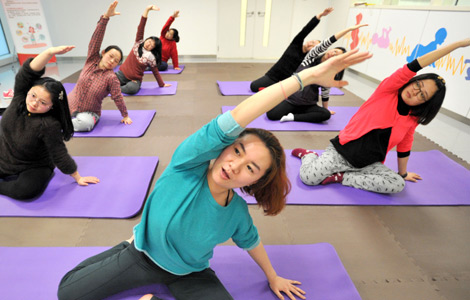 Hospital offers prenatal yoga instruction
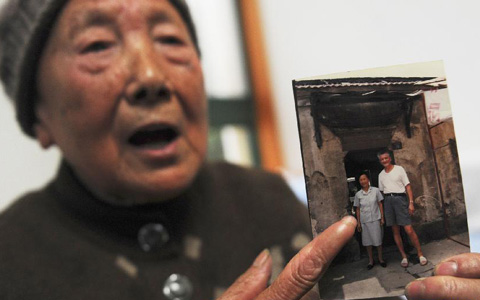 China to set national days for mourning Nanjing Massacre
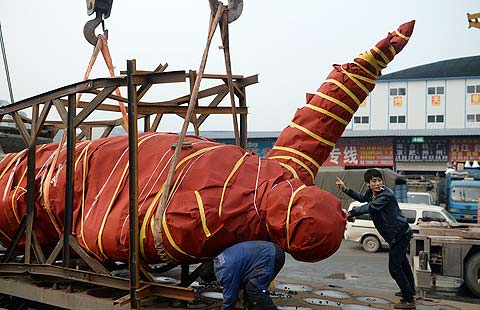 Chongqing moves Chairman Mao statue
 Monkeys with modified genes in SW China
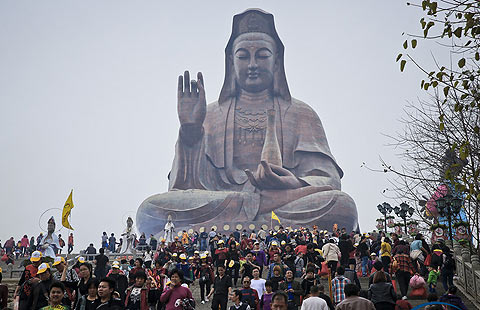 Tradition draws 100,000 to temple for blessed food
 A sea of fog in Qingdao
 Rural colors blooming in spring
Copyright 1995 - . All rights reserved. The content (including but not limited to text, photo, multimedia information, etc) published in this site belongs to China Daily Information Co (CDIC). Without written authorization from CDIC, such content shall not be republished or used in any form. Note: Browsers with 1024*768 or higher resolution are suggested for this site.
License for publishing multimedia online 0108263 Registration Number: 20100000002731