Languages of ethnic minorities protected in Xinjiang
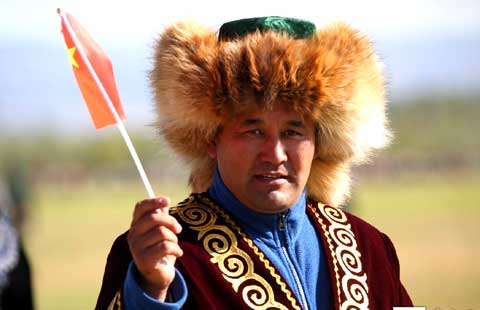
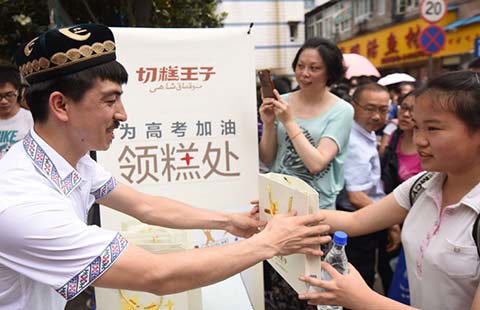
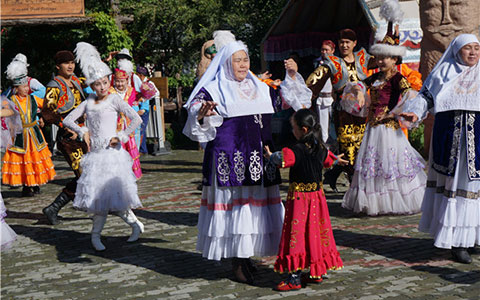
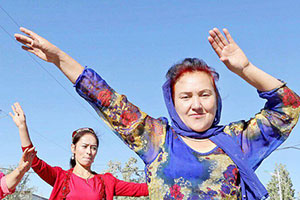
Multiple spoken and written languages in northwest China's Xinjiang Uygur autonomous region are widely used in various fields such as administration and education.
Titled "Historical Witness to Ethnic Equality, Unity and Development in Xinjiang" and released by the State Council Information Office, the report noted all ethnic groups are guaranteed the right to use and develop their own spoken and written languages, and Xinjiang is a region of multiple spoken and written languages, of which there are ten principal ones.
According to the report, a regulation on the region's work concerning spoken and written languages provides a legal basis for the extensive use of the spoken and written languages of ethnic minorities in a wide range of fields from justice, education, publishing, the Internet to daily life.
"Seven languages are used as teaching languages in primary and secondary schools in the region, five languages are used in broadcasting and television programs, and six languages are used in publishing books, audio-visual products and electronic publications," it said.
Also, government organs in handling public affairs and various other organizations in recruitment and promotion tests all use the languages of the ethnic groups exercising autonomy in a given area.
In addition, the autonomous region encourages ethnic minorities to study the standard spoken and written Chinese known as Putonghua, a common speech with pronunciation based on the Beijing dialect, and study one another's languages so as to enhance mutual understanding and communication, it said.
Reform and development benefit Xinjiang people
Since the founding of the autonomous region, and especially since the launch of the reform and opening-up drive, Xinjiang has enjoyed overall economic and social development.
Since 2010, Xinjiang has stepped up efforts and input in improving the people's living standards, undertaking over 500 key projects in this regard. Over the past six consecutive "people's livelihood years," the expenditure on improving the people's livelihood accounted for over 70 percent of the region's yearly total public spending.
The white paper said that in 2010, Xinjiang established a registration system for people with difficulties in finding work and for families of which no member was gainfully employed. By 2014, under this system Xinjiang had helped 29,000 members of these "zero-employment" families find jobs, cutting the number of zero-employment families by 26,000.
In 2014, the per-capita disposable income of urban residents averaged RMB 21,881, an increase of 51.2 fold over that of 1980, representing an average annual growth of 12.3 percent.
The white paper further said that the education, public health, social security and poverty relief have also been promoted in Xinjiang.
Related Stories
Copyright 1995 - . All rights reserved. The content (including but not limited to text, photo, multimedia information, etc) published in this site belongs to China Daily Information Co (CDIC). Without written authorization from CDIC, such content shall not be republished or used in any form. Note: Browsers with 1024*768 or higher resolution are suggested for this site.
License for publishing multimedia online 0108263 Registration Number: 130349