'China mode' can serve as an example
In August, Huang Jiefu, chairman of the China National Organ Donation and Transplantation Committee, received a message from Pope Francis praising the establishment of the "China Mode", a transparent system of organ donation and transplantation.
The message was delivered by Marcelo Sorondo, chancellor of the Pontifical Academy of Sciences and the Pontifical Academy of Social Sciences.
In February, Huang attended the Global Summit on Organ Trafficking and Transplant Tourism held by the science academy at the Vatican, and delivered a review of China's reforms and achievements.
Pope Francis has attached great importance to the China Mode, especially as a measure to enable the country to meet the UN's Sustainable Development Goals. He cited it as an approach to combating global organ trafficking, a practice that runs counter to the spirit of UN goals, such as human rights and social justice, according to Huang.
Ten years ago, prompted largely by Huang, a veteran liver transplantation surgeon and former vice-minister of heath, China promulgated laws and regulations to ban the trade in organs. In 2010, the country established a national post-death organ donation system, and five years later abolished the practice of harvesting organs for transplant from executed prisoners.
The country had been the target of international criticism, and Chinese transplant surgeons were barred from international academic exchanges.
Now, the international community is adopting the China Mode to combat organ trafficking, especially with regard to those who target the most vulnerable people in society, such as refugees.
"Thorough reform and the use of the China Mode is the only way to continue the sustainable and healthy development of organ transplantations in China," Huang said. "The new donation system serves as a new beginning."
The implementation of the China Mode has resulted in improvements to the quality and nature of transplants, and public sympathy has been tapped further.
"More patients can be saved by unknown donors from across the country," Huang said, adding that between January 1 and the end of July, more than 2,800 organs had been donated in China, a year-on-year rise of 33 percent.
"The figure is expected to rise to at least 5,000 by the end of the year, which will help about 15,000 people," he said.
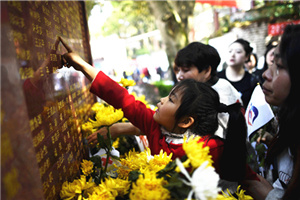
In 2010, when the country launched the public donation system, only 34 people donated their organs post-death, but the number surged to 4,080 last year, according to Huang. "We Chinese have never lacked love and a willingness to help others in need," he said.
Also, more than 300,000 Chinese have expressed a wish to donate organs after death, according to a registry developed by the committee.
Last year, Margaret Chan, a former director-general of the World Health Organization, said solutions developed under the China Mode that worked domestically could serve as models for other countries facing similar challenges.
shanjuan@chinadaily.com.cn