Time is running out for the 'magic rabbit'
Greater recognition of the Ili pika, an endangered species of mammal that only lives in the Tianshan Mountains in the Xinjiang Uygur autonomous region, is further threatening the animal, according to Li Weidong who discovered the species.
In July 1983, when Li was conducting fieldwork for the local health and epidemic prevention authority, he noticed a small creature emerging from a gap between large rocks in the mountains in the Ili Kazak autonomous prefecture.
The 62-year-old, who was familiar with rodents, was unable to discover any records relating to it. In 1986, the animal was recognized as a new species, so Li decided to call it the "Ili Pika" and devote himself to its conservation.
 |
|
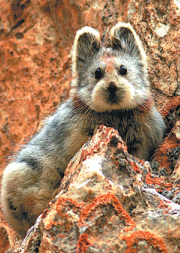
An Ili pika spotted in Xinjiang. LI WEIDONG/FOR CHINA DAILY |
A survey in 2002 showed that the number of Ili pika, which is also known as the "magic rabbit", had fallen to 1,500, about half the population in 1992. "Global warming has forced the animals to move further up the mountain. The size of their habitat has shrunk by 70 percent," said Li, who estimates that less than 1,000 now live in the wild.
In 2008, the animal was classified as "endangered" by the International Union for Conservation of Nature.
Despite regular field trips, Li didn't see any Ili pika in the wild for 22 years. However, in July 2014, he managed to capture a snap of the mammal looking straight into a camera he had installed close to its habitat.
The image was reproduced by the media, bringing the Ili pika global fame.
"The animal's cuteness means many people want to go to its habitat and take photos of it. Some people have even asked me if they can be domesticated and bred as household pets. That's the last thing it needs," he said.
Ili pikas now seem to have disappeared from nine of the 14 spots where they were once regularly observed in Xinjiang. "Without further protection, the animal will soon become extinct," Li said.
"As the person who discovered the species, it would be unbearable to see it become extinct, especially knowing that human beings played a part in its destruction."