Pei family maxim fosters ancestral pride
 |
|
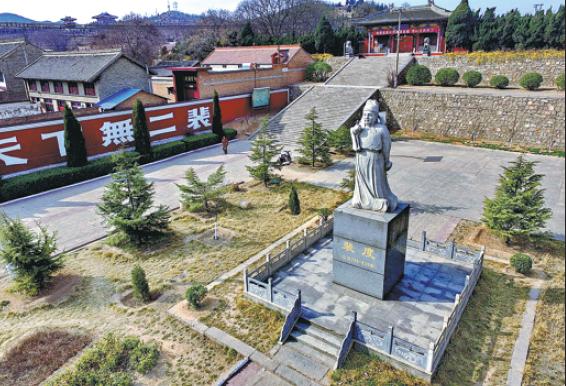
The statue of Pei Du stands at the center of the Peibai village. [Photo/China Daily] |
Pei Guochen, a farmer in his 60s, said according to the maxim, the purpose of education is not to accumulate private wealth, but to serve more people. The belief has been passed down to this day.
Although only 25 percent of the inhabitants of the village bear the Pei family name today, most residents are proud of the village's history and uphold the principles defined in the maxim.
Since 2012, President Xi Jinping has reiterated the importance of passing on family traditions, to cultivate good public ethics and promote good governance.
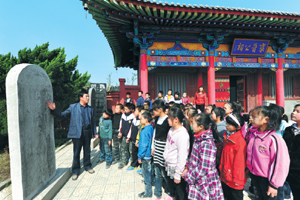
Since then, the village committee has made spreading the maxim one of its key tasks, and Pei Jianmin has received many visitors to the temple.
On the third day of the third month of the lunar calendar, said to be the birthday of the Pei people's first ancestor, the village organizes an ancestor-worshipping ceremony every year in the temple, attracting Pei people from around the country.
The ceremony has taken place since the Tang Dynasty. It is a tradition that the attendees plant cypress trees on the hill.
Pei Jianmin has met many clan members through the activity, and is gratified that there are so many Pei people with a strong sense of being descended from the same ancestor and expressing clan pride.
Pei Mingwen, 82, from Jiaozuo, Henan province, is one of them. He came to Peibai village to attend the ceremony 10 years ago and takes care to teach his children and grandchildren the Pei family maxim.
"I always teach my children to be honest, self-disciplined and show filial piety to their elders," he said. "That's what we need most today."
Pei Wenming, 48, came to the village to attend the ceremony for the first time this year. He lives in Tongliao, Inner Mongolia autonomous region.
"I only know that my ancestors moved to Northeast China from Hebei province. But I know nothing beyond that," he said.
"I can trace my roots in the village. It is a good feeling."
Despite his interest, Pei Jianmin worries that the population of the village is dwindling as increasing numbers of young people go to cities to earn a better living.
Although the local school was good compared with others in the township, it paled in comparison to schools in counties and cities, he added.
"A migrant worker can earn twice as much as a farmer in a year. Few people want to stay. Without people, family tradition has no soil to support its roots." he said. He hopes tourism development can attract more villagers to return.
Contact the writers at liyang@chinadaily.com.cn