Bridegrooms, bamboo and buckets of water
In some parts of China, it is traditional for bridegrooms to leave their homes and live with their wife's family.
In Xilin county, Guangxi Zhuang autonomous region, on the day of their wedding, parents almost always send their sons to live with their wife's family.
The bride's family hosts a wedding ceremony, bears all the expense and, unlike other parts of the country, does not demand a dowry.
In such families, sons-in-law enjoy the same status as their wives and other residents native to the village.
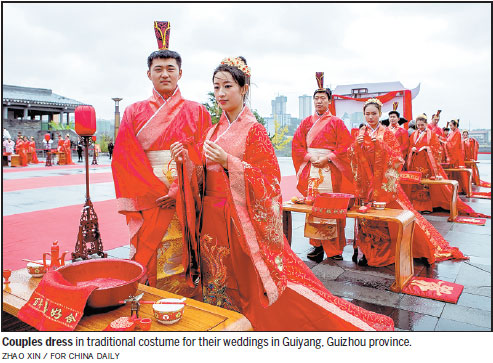
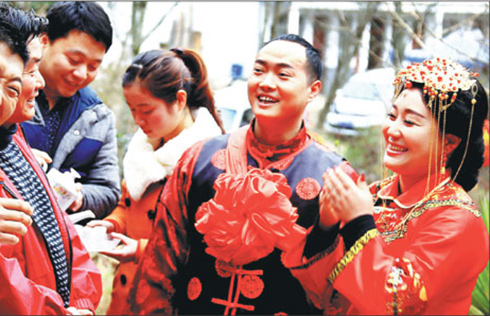
In many rural areas, traditional wedding ceremonies require the bride and groom to undertake a number of odd rituals to conclude a wedding.
For example, on the day of the ceremony the door of the groom's home is blocked with bamboo sticks by his relatives and friends.
The bride's family and the matchmaker, who arrive to invite the groom to the bride's home, have to try to break the blockade, enter the room and find the groom. In some areas, brides may have to drink up to three bowls of wine or sing traditional songs.
Before the groom arrives at his bride's home, he is subject to tests, such as carrying two buckets of water on a pole until he arrives at the door. The bride will be pleased if her groom spills very little water because it indicates strength.
When the ritual is complete, the bride carries the groom across the threshold to her bedroom.
In recent years, wedding ceremonies have become simpler, and grooms are allowed to wear Western-style suits instead of traditional costumes during the ceremony.
A similar tradition prevails in the Xishuangbanna Dai autonomous prefecture in the southwestern province of Yunnan, an area with a high proportion of people from the Dai ethnic group.
According to local tradition, before the wedding, the groom has to undertake unpaid work for his fiancee's family - such as logging or collecting resin from rubber trees - for a period of time. During this time, which may last as long as three years, he will eat with his fiance's family, but is only allowed to sleep in the living room.
Before marriage, the groom's family has to prepare a dowry, such as silverware, and banana and rubber trees.
After marriage, the husband must live with his wife's family for three years, and then bring his wife to live with his own family for three years. Following that, they return to the wife's family for a further three years.
The process continues until they eventually have their own home.