The conflic that changed China



 |
|
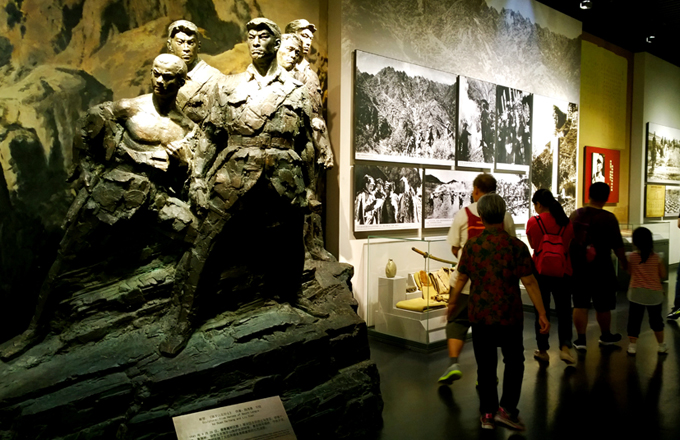
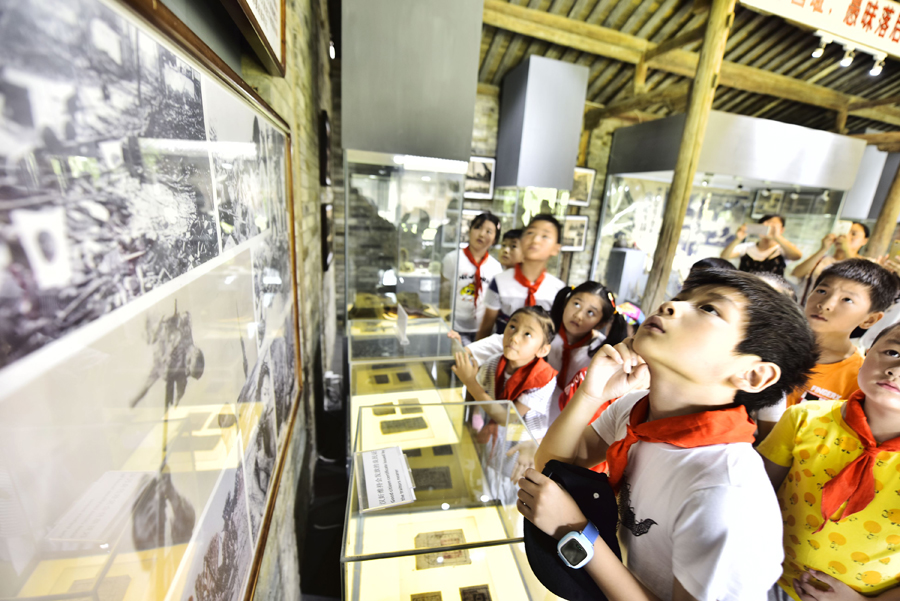
Students view the exhibits about the War of the Chinese People's Resistance Against Japanese Aggression at a museum in Hefei, Anhui province, July 6, 2017. [Photo by Ge Yinian/China Daily] |
"We found a file released by the Japanese army at around 3 am on July 8, 1937, two and a half hours before they bombed Wanping. The documents say the conflict was due to 'the illegal conduct of the Chinese army'," he said. "This was the version of events used by all Japanese media in the following days. Given the time of the release, we have reasons to believe the document had actually been prepared beforehand."
There was no mention of a missing soldier in the document. In fact, in an interview published by the Japanese newspaper Asahi Shimbun on June 30, 1938, Kiyonao Ichiki, an officer who had taken part in the incident, admitted that Private Kikujiro had returned to camp before 1 am on July 8, 1937.
Du, from the memorial museum, said: "The Japanese army, by the way, was outside of Beijing at the time as a direct result of the unequal treaties signed between China and Japan in 1901. The military exercise they put on was an unambiguous gesture of provocation."
Now, despite the changes that have taken place-Wanping is now officially part of the expanded city of Beijing-reminders of the war are still visible.
The walls of the citadel, built in the mid-17th century, still carry the scars of the bombs, and 500 meters away, on the other side of the Yongding River, sits the Daiwang Temple, which served as the headquarters of the Chinese soldiers who guarded the area in 1937.
Between the county wall and the temple is the 267-meter-long Lugou Bridge, also known as the Marco Polo Bridge named after the Italian explorer (1254-1324) who raved about the 12th-century stone structure in his memoirs. The bridge, known for its 501 distinctly individual stone lions, is probably the oldest witness to the events of July 7, also known as the Lugou, or Marco Polo Bridge, Incident.
For nearly 20 days, before the Nationalists' retreat on the afternoon of July 28, Ma Buxian guarded the bridge. The river was almost dry, and the Japanese, backed by heavy machine gun fire and artillery, charged repeatedly over the muddy riverbed towards the Chinese defenders.
Ma, who appears in the museum's video footage, said he had felt no fear.
"I heard nothing but the deafening roars of my fellow Chinese," he said.
Contact the writer at zhaoxu@chinadaily.com.cn