UN exec: Beijing now seen as leader
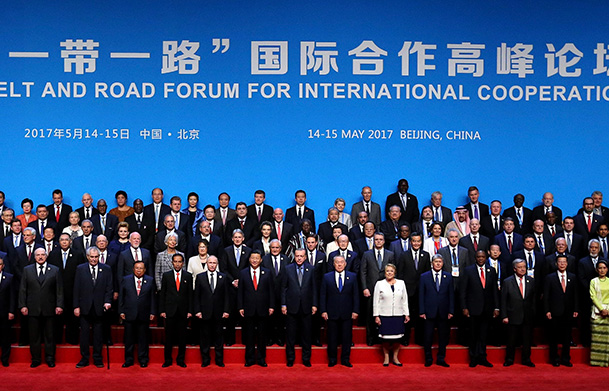
When Taleb Rifai of Jordan boarded a plane at Paris Charles de Gaulle Airport to fly to Beijing for the Belt and Road Forum for International Cooperation, he could not help but notice that everything was in three languages: French, English and Chinese.
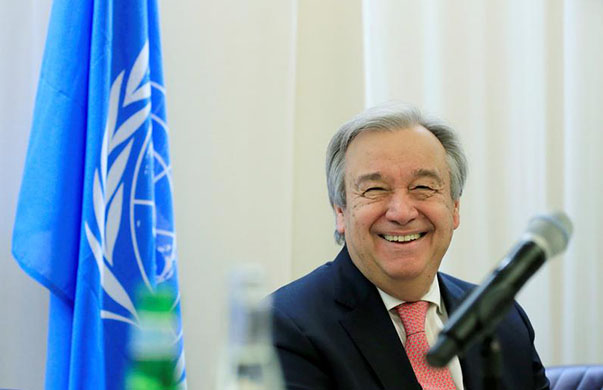
"That would be unthinkable just a decade ago," said Rifai, 68, secretary-general of the United Nations' World Tourism Organization since 2010. He spoke to a small number of journalists on Monday afternoon at the China National Tourism Administration's headquarters.
"The world is open to you, respecting you and expecting your leadership," said Rifai. "My children and grandchildren want to speak Chinese, because they know that's where the future is."
When President Xi Jinping proposed that the Belt and Road Initiative promote better connections among people through tourism, Rifai listened carefully.
"Never in my life have I seen a world leader laying out a vision like President Xi did," he said. Rifai said what Xi proposed is exactly what the United Nations has had in mind and sought during the past two decades.
"The belt is what binds us all, and the road is where we must walk," Rifai said. "In 10 years, maybe we will all be part of the initiative."
Rifai recalled that the first time he took a plane, he was 17. "Things have changed greatly. More people, young and old, are breaking barriers to see the world. They are treating travel as a basic human right."
Only 22 million people were traveling internationally in 1950, but the number has skyrocketed to more than 1.2 billion a year, and projections have it rising to 1.8 billion by 2030, Rifai said, illustrating the growth potential of the industry. His organization estimates that tourism contributes more than 10 percent of the world's GDP.
"It is particularly important for President Xi to raise this proposal in today's world," Rifai added. "There are many people who want to divide us. They want walls, not bridges."
Rifai noted that Xi's proposal coincides with a trend he has observed, that the center of world tourism is shifting from the West to the East. Europe, which has been the de facto tourism center for a long time, received about half the world's international travelers last year. That proportion is down from 60 percent in the past decade.
Rifai predicted that 60 percent of international travelers will go to developing countries instead of Europe and other developed regions in the coming years.
"Europe is still the center, but Asia is the future," Rifai said. "But of course, you want to travel to a place where you feel good about yourself and your trip."