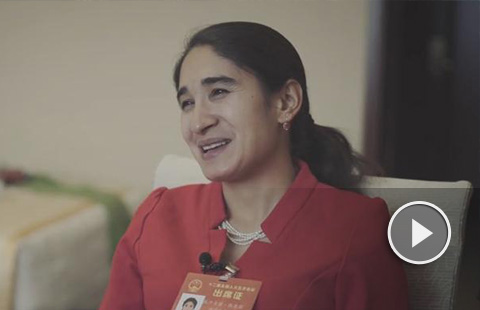
Social think tanks earn recognition
Think tanks run by domestic nongovernment organizations, officially named "social think tanks", which were once marginalized if not ignored, have finally earned recognition and strong support from the Chinese government.
The government promised on Friday in a circular to make policies to help these think tanks grow, while enhancing regulations to improve their management. Among things to expect, foreigners who work for these think tanks may enjoy more favorable job benefits like public health insurance, which were not guaranteed before.
The Ministry of Civil Affairs, which is in charge of most NGO-related issues, joined hands with eight other key government organs, including the Ministry of Foreign Affairs, the Ministry of Public Security, the Ministry of Finance and the Ministry of Human Resources and Social Security, to issue the circular.
Social think tanks will have better access to government information and statistics to facilitate their research. They can also bid for government purchases of public services. Legal channels may be cleared for think tanks to raise funds from various sources to better finance their operations. Think tank employees may also find opportunities to transfer to government organs and vice versa.
Meanwhile, they need to accept supervision from civil affairs departments of different provinces and the specific government bureau that oversees their main business.
There are many kinds of think tanks in China. A majority are run or sponsored by the government, including public institutions, colleges and research centers, while some operate as business enterprises.
But overall, China's top leadership is not satisfied with the status quo of these think tanks. The central government pointed out in a 2015 circular that China's think tanks are not compatible with the development of the nation. It acknowledged that China lacks internationally reputable and respected think tanks, and that there was no established channel for think tanks to contribute to political decision-making, in part because most people have not realized the importance of think tanks.
The central government vowed back then to build a number of internationally influential and well-known think tanks, and create a systematic mechanism to make full use of these think tanks by 2020.
Miao Lu, secretary-general of the Center for China and Globalization, which was founded in 2008 and with 103 full-time employees is one of the biggest social think tanks in China, said she felt "greatly encouraged" by the circular.
"When Mr Wang Huiyao and I first founded the think tank, we had already earned some money and just wanted to give something back to society." Miao said. "Now that the joint statement has been made to support our career, we just need to wait for the implementation."