City's urban areas switch to alternative energy
|
|
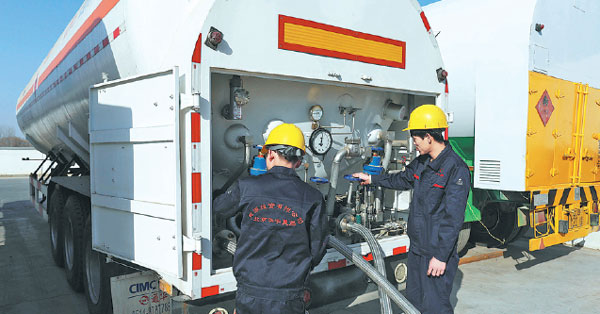
Beijing is aiming to eliminate the use of coal in six urban districts and 700 rural villages by the end of this year, officials said.
Instead, residents are encouraged to use electricity and alternative clean energy amid the capital's efforts to cut emissions and fight smog.
According to the city's plan, six urban districts - Dongcheng, Xicheng, Chaoyang, Haidian, Fengtai and Shijingshan - will all become "zero coal-burning" zones this year.
To reduce the financial burden on residents, extra bills from using clean energy will be subsidized by municipal and district governments.
So far, Beijing's Xicheng district has taken the lead, eliminating coal consumption at the end of 2015.
A total of 160,000 households in Xicheng district have completed the transformation from burning coal to using electric heating during the past heating season, which runs from November to mid-March, thanks to a program started in 2001, according to Zhang Wei, head of the Environmental Bureau of Xicheng district.
The district government spends about 40 million yuan ($5.8 million) a year installing new heating devices for households and subsidizing electricity bills, Zhang added.
Meanwhile, in the rural areas of Beijing, 663 villages with 227,000 households have replaced traditional loose coal with gas or anthracite, a variety of coal that burns with smokeless flame, by the end of 2016, according to Guo Zihua, director of Beijing Rural Construction Office.
"Such a move has cut coal consumption by 681,000 metric tons," Guo said.
This year, the municipality set a goal to complete the transformation program among the remaining 700 villages.
"We will extend the pipelines of compressed and liquid natural gas to rural households, so they can use natural gas instead of coal," Guo said.
The transformation in both urban and rural areas have contributed to improved air quality in Beijing.
According to Zhang, the density of sulfur dioxide, nitrogen oxide and inhalable particles in Beijing has fallen by 77 percent since 2001.
For residents, the change is more visible.
Wang Wenhua, who lives in Xicheng district, said her house used to be packed with coal block in winter, leaving dust everywhere.
The dirt disappeared after her home installed a new device for electric heating in 2015.
"Compared with coal, electricity is much cleaner and more convenient to generate heat. Since we get subsidies from the government, the bill is the same for us," she said.
renxiaojin@chinadaily.com.cn





- Beijing dismisses reports of THAAD radar, calls for halt in its deployment
- China-Philippine travel booms on improving ties
- Beijing calls distrust the root cause of Korean Peninsula nuclear issue
- Beijing budgets billions of yuan in effort to clean up air
- Scientists find earliest intact mushroom fossils