A letter, a cake and a promise
In the summer of 1881, a group of Chinese sailors, with their tanned skins, long braided hair and dragon-embroidered uniforms, walked down a street in Newcastle-upon-Tyne in northern England as the locals, unused to the sight of Chinese people, flocked around to observe them and pass comment.
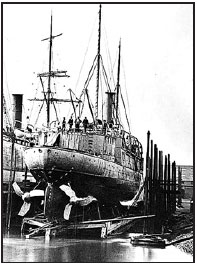
The sailors had been the center of attention since April 24, when their 200-strong delegation arrived in the city. Their mission was to bring home two British-built cruisers, the Chaoyong and the Yangwei, to form the Beiyang, or Northern, Fleet and defend China against threats from overseas.
The ships weren't ready, so Ding Ruchang, the head of the delegation, opened the Chinese flagship to the public and encouraged the sailors to mingle with the locals to learn about Western culture.
"The sailors were like rock stars," said Li Xiaojie, president of the China Foundation for Cultural Heritage Conservation. "Hundreds, sometimes thousands, would tour the Chinese ship every day. It was an eye-opening experience for both the Chinese and the British."
|
|
Chi Zhongyou, the delegation's official scribe, recorded his experiences and the entire trip in his diary, The Journal of a Western Journey, which is now kept at the Museum of the Sino-Japanese War in Weihai, Shandong province. During a visit to the home of his friend James Fenwick, Chi fell in love with Annie Fenwick, James's younger cousin. It was love at first sight, and two days later, Chi wrote to Annie to declare his love.
However, not everything was rosy. Chi recorded that four days after the delegation arrived, sailors Yuan Peifu and Gu Shizhong died from unknown illnesses. Both were low-ranking deckhands and, with the exception of Chi's brief record, little is known about them.
"They were probably in their mid-20s, bold, energetic and willing to learn anything to protect their country, even learning things from the enemy," said Chen Yue, president of the Chinese Naval Historical Institute. "A naval career is dangerous, but to die without a fight, one cannot imagine how unfulfilling that must feel."
The two warships were officially handed over to the Chinese on Aug 2, and on Aug 8, a day before departure, Chi paid a final visit to the graves of his dead comrades.
However, he had forgotten to take flowers or any other offerings, so he rushed to the Fenwick's home and asked Annie and her sister Margaret to plant some flowers for the sailors the following Sunday.
The next day, Annie arrived to bid Chi goodbye. She brought a frosted cake, with the ship's name, Chaoyong, and Chi's name written on the top in honey. She also brought a jar of cookies for Chi's mother, accompanied by a polite note wishing the old lady good health.
"When shall we meet after this hasty departure? Who can relieve me of this lingering love?" Chi wrote in his diary entry for the day.
On Nov 17, Chi's delegation arrived at the Da Gu shipyard in the northern Chinese port of Tianjin. He never saw Annie again.
Six years later, when a 400-strong Chinese delegation returned to Newcastle to collect the cruisers Zhiyuan and Jingyuan, three sailors - Lian Jinyuan, Chen Shoufu and Chen Chengkui - died from illnesses and were buried next to Yuan and Gu.
Fortified by eight German- and British-built cruisers, the modern Beiyang Fleet was born in Weihaiwei, Shandong province, now known simply as Weihai, on Dec 17, 1888. With about 40 ships and more than 4,000 personnel, the fleet constituted more than half of the Qing Dynasty's (1644-1911) total naval force, according to Chen.
In June 1911, Chen Biguang, an admiral who was in the United Kingdom for the coronation of King George V, paid a special visit to St. John's cemetery in Newcastle and oversaw repairs of the damaged tombstones.
In 2012, Deng Xinli, a reporter for Weapons Magazine, which publishes articles about military history, visited the cemetery and discovered several yellow flowers growing next to one of the tombs. The locals told him that they had been planted in memory of the Chinese sailors.
"The flowers are for those who did not return," Deng later wrote.