Legislative official hopes the public will donate through qualified charitable organizations
The third draft of the Charity Law is more flexible about online public fundraising by charities, and offers more scope for the nuanced definition of individuals seeking to raise funds online.
"If charities carry out online public fundraising, they shall post relevant information on the charity information channels designated by civil affairs departments. They may, at the same time, post such information on their own websites," said Li Jianguo, vice-chairman of the Standing Committee of the National People's Congress.
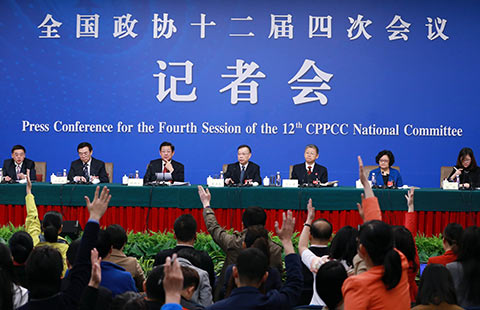
The third draft of the law, released on Wednesday, has been discussed by NPC deputies and political advisers during the two sessions.
In the second draft, charities were not allowed to post online public fundraising information on their own websites, and they could only post on certain websites designated by the government.
"It gives charities more flexibility to launch online public fundraisers," said Yang Tuan, a social policy researcher with the Chinese Academy of Social Sciences.
"Charities eligible for public fundraising are able to publish fundraising information on their websites. They are also required to post the fundraising information on relevant civil affairs department websites, which is a way to file a record with the civil affairs department," she said.
Individuals seeking financial help online should not be included in the law, she said.
"The concept should separate individual behavior from organizational behavior. (How to address) individuals seeking help for personal interests, such as for their children or family members? This needs to be further explained," she said.
When the first draft of the Charity Law solicited opinions from the public in 2015, people questioned the regulation of individuals launching online public fundraising.
If a person raises money on social media for a sick friend, would it be legal?
In Yang's view, the issue is one of individual behavior, which should not be included in the Charity Law, but will likely be explained later.
"The draft does not protect individual behavior to raise money on social media platforms," said Wang Ming, a CPPCC member and president of the NGO Research Institute at Tsinghua University.
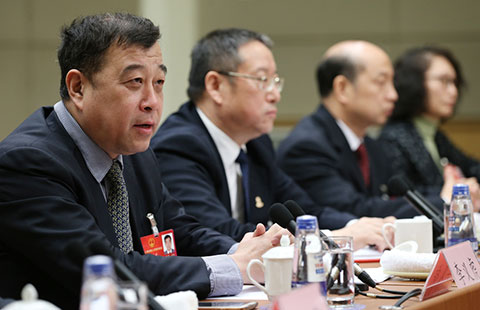
Kan Ke, vice-director of the Legislative Affairs Commission under the Standing Committee of the NPC, said the proposed legislation does not encourage individual donations.
"Instead, we hope the public will donate through charitable organizations. If someone wants to donate or asks for help, he or she can be advised to turn to a qualified charitable institute," he said.
"In other words, unqualified organizations with an intention to do the charity, or the individuals in such a situation, must be combined with the qualified ones," he said.
The third draft only regulates the responsibilities of charities eligible for public fundraising. It also states that individuals and charities without public fundraising qualification should work with charities that are qualified or authorized to raise funds from public, if they wish to launch public fundraising.
Contact the writers through luowangshu@chinadaily.com.cn
Copyright 1995 - . All rights reserved. The content (including but not limited to text, photo, multimedia information, etc) published in this site belongs to China Daily Information Co (CDIC). Without written authorization from CDIC, such content shall not be republished or used in any form. Note: Browsers with 1024*768 or higher resolution are suggested for this site.
License for publishing multimedia online 0108263 Registration Number: 20100000002731