Experts are convinced that China will assume a leading role in ensuring peace and stability in its own "backyard". Zhang Yunbi reports.
Senior diplomats and veteran policy experts believe that one of the most demanding tasks for Chinese diplomacy this year will be to ensure stability in China's neighborhood.
The challenge comes amid destabilizing factors that are putting increasing pressure on China's national security interests, including the Korean Peninsula nuclear issue and tensions in the South China Sea.
The experts are also looking forward to a range of Chinese initiatives as well as global events hosted by the country, including the G20 leaders' summit in September.
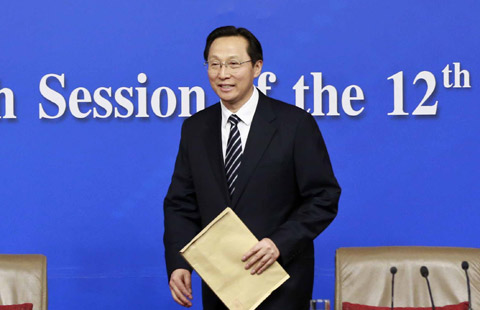
Cheng Yonghua, a political adviser and China's ambassador to Japan, said: "With an eye on the security and stability of the neighborhood, I think we should make further efforts to safeguard the stable circumstances around our country."
Another goal will be to ensure that "China's domestic development and construction can proceed as planned", he added.
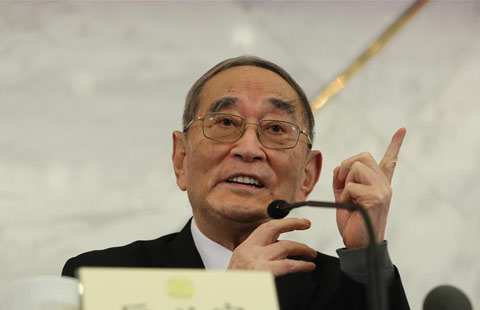
Zhang Yunling, a political adviser and a senior researcher in Asia-Pacific studies at the Chinese Academy of Social Sciences, said neighboring areas to the west and north of China have been tranquil overall this year, while challenges are mainly seen as being related to the Korean Peninsula and the South China Sea.
Construction work on China's islands and the deployment of defense facilities in the South China Sea have drawn fierce criticism and even military provocation from the United States, according to Zhang.
Washington is using provocation and demonstrations of power to deter Beijing from stepping up a lawful buildup in the South China Sea, and "the biggest challenge for China this year is to stabilize the situation despite US intimidation", he said.
'Clear-headed' policiesZhang suggested that China reinforce its ties with members of the Association of Southeast Asian Nations, because they are reliable. He also said that Beijing's related policy-making should be "clear-headed".
With reference to the Korean Peninsula, Zhang said China's latest support for sanctions after a recent UN Security Council resolution "will pay off, and restrain Pyongyang's nuclear program", and "it is possible to avoid major conflicts on the peninsula".
Beijing should step up communications with all parties concerned to ensure the resolution works effectively. Although major turmoil seems unlikely right now, a contingency plan should be prepared, Zhang added.
Wu Enyuan, a political adviser and former director of the Institute of Russian, Eastern European and Central Asian Studies at CASS, observed that most of the nearby challenges-including those related to the peninsula and maritime issues-are directly or indirectly connected to the US "pivot to Asia" strategy.
"In the long-term, the US-no matter who wins the presidency-will not give up its strategy of containing China by stirring up maritime problems, but it's unlikely that we will see a major conflict between China and the US," Wu said.
He suggested that China should continue its dialogue with the US because "the space for cooperation between the two major countries is still large".
Zhang said that even in the event of potential conflict with her neighbors, China should boost efforts to tackle problems effectively.
Wu echoed that view, saying China is "a controllable factor which will, and should, serve as a key stabilizer of the region", and the country should avoid distractions or excessive concerns about doomsday scenarios.
Hosting the G20
With regard to this year's diplomatic highlights, Chinese policy insiders are looking to the G20 Summit, which will be held in Hangzhou, the capital of East China's Zhejiang province, in September.
Zhai Jun, China's ambassador to France, said that as host, China will be expected to "play an important role, given the current situation".
China is expected to "nurture consensus, coordinate joint efforts in tackling the sluggish global economic situation, and usher in new growth", he said.
"These days, interests are interwoven among all the countries. If one suffers (from critical conditions) the rest will also be affected. There is mounting consensus in this regard, and it is time for the countries to sit at the table to see which policies should be adjusted", he added.
Wu Enyuan, the scholar with CASS, said China's hosting of the G20 summit is recognition of the country's status in the global economic picture, and the nation should "take the chance to make its philosophy and initiatives better heard by the world".
Contact the writer at zhangyunbi@chinadaily.com.cn
Copyright 1995 - . All rights reserved. The content (including but not limited to text, photo, multimedia information, etc) published in this site belongs to China Daily Information Co (CDIC). Without written authorization from CDIC, such content shall not be republished or used in any form. Note: Browsers with 1024*768 or higher resolution are suggested for this site.
License for publishing multimedia online 0108263 Registration Number: 20100000002731