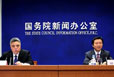
BEIJING - The World Health Organization (WHO) praised the National Health and Family Planning Commission (NHFPC) on the launch of the new National Action Plan to Contain Antimicrobial Resistance. The new plan will help strengthen China's response to the growing global challenge of antimicrobial resistance - which threatens to make common infections once again untreatable.
"We are delighted to see the release of the China's National Action Plan, which sets out a clear multi-sectoral approach for keeping antimicrobial agents - our most relied upon drugs - effective for as long as possible," said Dr Bernhard Schwartl?nder, WHO Representative in China.
Antimicrobial resistance - that is, bacteria resistance to drugs - is a major public health threat, because it risks making our most relied upon medicines (like antibiotics) ineffective in treating disease. Antimicrobial resistance is increasing rapidly - with terrible consequences for health, as well as the economy. A recent study estimated that by 2050, antibiotic resistance could result in 1 million premature deaths annually in China, and cost the country a cumulative US$20 trillion.
"Antimicrobial resistance is a problem created by human behavior - largely through the inappropriate use of antimicrobials in health care, as well as in animal husbandry. That's why this National Action Plan is so significant - it lays out a comprehensive approach to tackling the problem," Dr Schwartl?nder said.
As in other countries, antibiotic resistance in China is driven by several factors. First, there is insufficient availability of rapid diagnostic tests that allow physicians to correctly diagnose and then prescribe the correct antibiotics. Second, antibiotics are still readily available over-the-counter (that is, without a doctor's prescription), and antibiotics are used far too often when they are not needed. Third, hospitals often generate revenue from the sale of drugs including antibiotics - so there are financial incentives within the system for over-prescribing. Finally, many members of the public still demand antibiotics when they may not be needed, and then may not complete a full course of treatment - which allows antibiotic resistant bacteria to spread. In the animal sector the same antibiotics are used to prevent and treat infections, as well as to stimulate growth.
China accounts for around half the antibiotics consumed worldwide, around half of which are consumed by humans, and the rest in food production.
"We congratulate the 14 departments who have collaborated to publish this joint plan. While antimicrobial resistance is a major health threat, the health sector cannot tackle it alone: a multi-sectoral approach across both the human health and animal health sectors is critical. This collaboration is a global best practice that can be shared with other countries," said Dr Schwartl?nder.
The new National Action Plan outlines actions which will reduce current overuse including: launching new initiatives around management of antibacterial agents and new diagnostic instruments; strengthening surveillance both of antibacterial agent consumption, as well as antimicrobial resistance in both the healthcare and animal sectors; better controlling the increasing antimicrobial-resistant bacteria which originates in animals; and implementing educational efforts to ensure that human and animal health professionals, as well as students, receive good information and training on the rational use of antibiotics. These actions are in line with the strategic objectives set out in WHO's Global Action Plan on antimicrobial resistance.
"Through the publication of its own National Action Plan, China is in an excellent position to play a leading role in the global response to this issue - including by encouraging other countries to develop their own National Action Plans on antimicrobial resistance, as all committed to do at the World Health Assembly in May of last year," said Dr Schwartl?nder said.
A series of important, high-level international meetings will take place over the coming weeks - in which China has an opportunity to demonstrate it leadership on tackling the threat of antimicrobial resistance: the G20 in Hangzhou in early September, and the UN General Assembly High Level Meeting on AMR to take place in mid-September.
"China's national authorities have WHO's full support as they now look to the critically important tasks of implementing, monitoring and evaluating the Action Plan. We look forward to working with the NHFPC on this important next phase of work, which we know will be essential to keeping future generations safe from the threat of infectious diseases," Dr Schwartl?nder concluded.



Copyright 1995 - . All rights reserved. The content (including but not limited to text, photo, multimedia information, etc) published in this site belongs to China Daily Information Co (CDIC). Without written authorization from CDIC, such content shall not be republished or used in any form. Note: Browsers with 1024*768 or higher resolution are suggested for this site.
License for publishing multimedia online 0108263 Registration Number: 130349