Chinese scientists claim possible breakthrough in HIV, hepatitis cure
 |
|
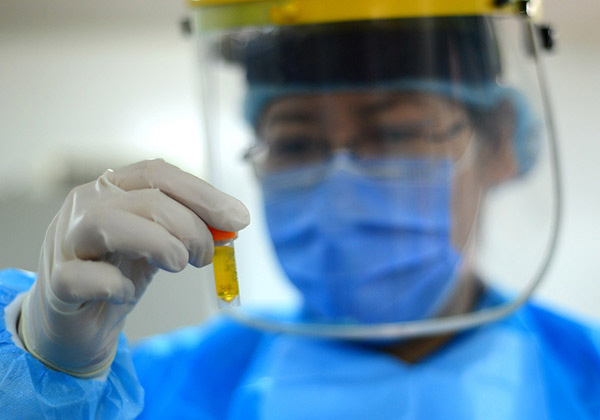
A technician carries out a blood test for HIV virus at Jinan AIDS lab in East China's Shandong province in this file photo. [Photo/IC] |
There's now hope at the end of the tunnel for patients with chronic viral infections, such as HIV and hepatitis B.
According to an article published online by Nature magazine, Chinese scientists have identified a unique subset of virus-specific CD8+ T cells playing a pivotal role in the control of viral replication during chronic infection.
Ye Lilin, a professor from the Third Military Medical University in Chongqing and a co-author of the article, said that the CD8+ T cells kill infected cells and secrete antiviral cytokines to effectively clear the virus in the acute infection.
During the chronic viral infection, the CD8+ T cells become exhausted, exhibiting poor effecter function and lose memory ability, Ye said, who is working under a national program launched in 2013. "The number of CD8+ T cells does not drop, but it seems like police stop fighting with criminals."
However, though the exhausted cells seem to lose the function of getting rid of the virus, scientists found that they still contain viral replication in chronic infections to keep the amount of virus at a low level.
Scientists discovered that a subset of exhausted CD8+ T cells expressing the chemokine receptor CXCR5 plays a critical role in the control of viral replication in mice that were chronically infected with lymphocytic choriomeningitis virus.
Scientists called the subset as CXCR5+ CD8+ T cells that were preferentially localized in B-cell follicles, expressed lower levels of inhibitory receptors and exhibited more potent cytotoxicity.
Scientists identified the Id2/E2A axis as an important regulator for the generation of the CXCR5+ subset.
Currently, chemical drugs can only restrain the viral replication to some extent, but not clear the virus in treating patients of HIV, hepatitis B and cancers.
Ye said the new findings would allow researchers to find certain measures to improve and stabilize the function of CXCR5+ CD8+ T cells to clear the virus, offering possibility of curing these diseases.
- Dating app for HIV patients a good match for those seeking love
- Swindlers of people with HIV and those leaking their info must be punished
- HIV/AIDS patients fall prey to identity-leak scam
- Microbiome disruptions may explain HIV-exposed babies' poor health: study
- Phone fraudster targeted HIV patients using leaked information
- Joint WHO-UNAIDS Statement on HIV information leak
- HIV/AIDS control in China






- Is it a thing? 10 odd jobs where you can make good money
- Message on a bottle: Mineral water company launches drive to find missing children
- Sun Yat-sen champion of national integrity, unity: Xi
- Four killed, two injured after house collapses in C China
- Cross-Straits forum held to commemorate Sun Yat-sen