|
|
Tibet could become the cultural, economic and humanitarian hub of the Himalayas and so build a peaceful, cooperative relationship with its South Asian neighbors, experts at the Sixth International Forum on Tibetan Studies have suggested.
Sandwiched between the Silk Road Economic Belt and the 21st Century Maritime Silk Road, Tibet plays a significant role in connecting both initiatives, making it an ideal place for cultures to meet.
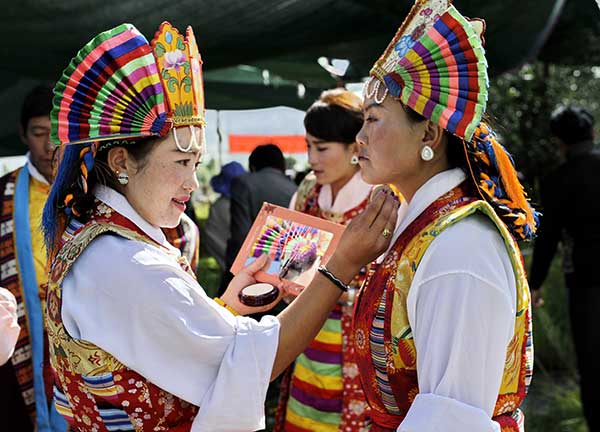
"With its beautiful thangka (Buddhist-themed paintings on cloth) and unique clothing, Tibetan culture is very attractive in the Himalayan region. Its influence can radiate through mountains and connect with other South Asian countries," said Lai Shanglong, chief economic commissioner of the United Nations Department of Economic and Social Affairs.
In June last year, China opened a new land route along Himalayan Nathu La Pass for Indian pilgrims to visit the holy sites of Mount Kailash and Lake Mansarovar in Tibet, considered sacred by Hindus and Buddhists. The initiative was universally hailed.
Lai said if China expanded its humanitarian aid projects in Tibet to other South Asian countries - providing practical services such as teaching, repairing buildings and medical treatment - that initiative would also earn praise.
"This would strengthen goodwill toward China in South Asian communities, improve China's image and increase support from neighboring countries," he said.
Trade routes such as the Ancient Tea Horse Road have facilitated economic and cultural interaction for centuries, said Liu Zhifu, director of the South Asia Research Institute at Xizang Minzu University.
Today, the Belt and Road Initiative is breathing new life into Burang, Gyirong, Zham and other ports.
"There is huge demand for high-quality, authentic Tibetan goods, like incense and highland barley products," said Di Fangyao, executive deputy director of the institute.
However, most of the trading goods are not made in Tibet.
"It's high time that Tibet increase its exports of locally produced goods," Di said.
Di also spoke of the importance of infrastructure. The border trading market in Yadong county can open for only six months before the harsh winter sets in.
"I once saw a family of four herding two dozen donkeys carrying cement on their way to Nepal. There is no way the economic and cultural weight of the Belt and Road Initiative can be carried on donkeys," he said.
Zhang Zhihao contributed to this story.



Copyright 1995 - . All rights reserved. The content (including but not limited to text, photo, multimedia information, etc) published in this site belongs to China Daily Information Co (CDIC). Without written authorization from CDIC, such content shall not be republished or used in any form. Note: Browsers with 1024*768 or higher resolution are suggested for this site.
License for publishing multimedia online 0108263 Registration Number: 130349