 |
|
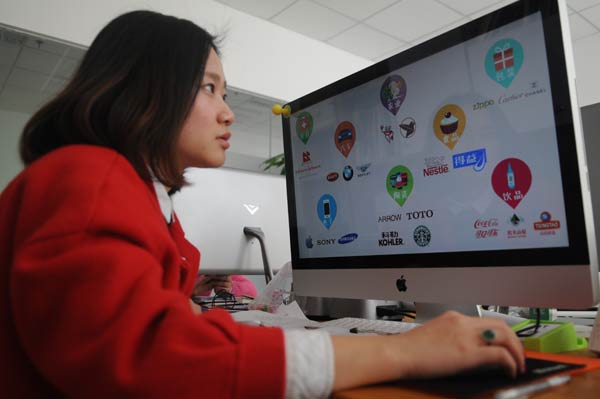
Li Fangwei, a graduate from Hunan province, works as a designer at a technology and innovation company in Zibo, Shandong province. Last year, the city set up an entrepreneurship center for graduates that offers favorable policies to encourage budding businesspeople to start their own companies. [YAN SHENGTING / CHINA DAILY] |
Country's future rests in the hands of the bright and the young
Thirty-three years ago Chen Bin decided to quit his job in a State-owned maternity hospital in the northwestern city of Lanzhou and to go into business on his own. First he sold T-shirts in a night bazaar, then owned a karaoke bar, which did not last long, and later opened a bakery on the main road.
Chen is among millions of Chinese who, after economic reforms introduced by Deng Xiaoping in 1978 that encouraged private business, decided to embark on the entrepreneurial road. However, he says he soon found that managing a business was a lot harder than he had expected.
"Most of the entrepreneurs lacked a basic knowledge about how to make things work. That was why becoming self-employed was called xia hai (diving into the sea) - a lot of them were going to drown."
A lot did, too. There were a few exceptions, such as Wang Jianlin, the real estate tycoon, and Liu Chuanzhi, founder of the Lenovo Group Ltd, who would make their mark not only in China but around the globe, and others who did reasonably well, or even better, and retired.
In 2002, 15 years after Chen opened his bakery business, it folded amid fierce competition, and these days there is a cafe across the road that has become a hot-spot for young self-employed to exchange ideas.
"I envy those kids sometimes," Chen says. "They are better educated and have the know-how in particular fields, which I think is the biggest difference between today's young entrepreneurs and those of my generation."
Now, nearly four decades after China began opening up, there is a new boom in startups, but rather than selling fabrics, cheap plastic toys, cakes and the like, these ventures have a sharp technology bent and are looking to serve markets the size of which their earlier counterparts could barely have conceived of.
In these fledgling companies the country sees the opportunity to give a fillip to innovation, in turn spurring domestic consumption that can help ensure the country's future prosperity.
Two years ago Premier Li Keqiang sounded a clarion call to the young to start their own businesses and take up the challenge of technological innovation, and he pledged the government's wholehearted backing.
Following up on that, last year the government unveiled dozens of measures aimed at helping grassroots entrepreneurs, including giving them tax breaks and easing their path to obtain finance.
Lin Nianxiu, deputy director of the National Development and Reform Commission, says the aim is to cut red tape and help the startups solve practical problems.



Copyright 1995 - . All rights reserved. The content (including but not limited to text, photo, multimedia information, etc) published in this site belongs to China Daily Information Co (CDIC). Without written authorization from CDIC, such content shall not be republished or used in any form. Note: Browsers with 1024*768 or higher resolution are suggested for this site.
License for publishing multimedia online 0108263 Registration Number: 130349