|
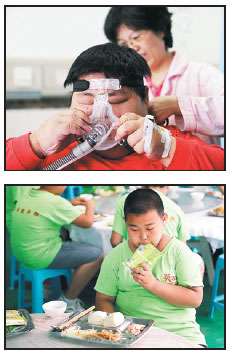
Top: Xu Han, who weighed 174 kg, was reliant on a breathing machine because of respiratory failure caused by obesity. On May 10, the 23yearold had surgery to remove part of his stomach. Above: A special diet is provided at a summer camp for overweight children in Qingdao. Photos By Cui Jingyin And He Yi / For China Daily |
Chronic diseases soar
A rising rate of obesity is closely related to the surge in the incidence of many non-infectious diseases, which are now the primary health threat for China.
According to a report released by the World Health Organization last month, the number of Chinese people with diabetes is estimated to be 110 million, about 10 percent of the adult population, but in 1980, the figure was less than 5 percent.
Being overweight and a low level of exercise were the main causes of the disease in patients with Type-2 diabetes, which accounts for 90 percent of those with the condition, the report said.
Moreover, the rapidly rising obesity rate among children increases the chances of them contracting chronic diseases such as diabetes, said Yang Wenying, director of the Endocrine and Metabolic Diseases Center at the China-Japan Friendship Hospital in Beijing.
"Clinicians have seen a fast rise in the number of children with diabetes. Most of these young patients are obese or overweight."
Those conditions have been major contributors to a rise in cardiovascular disease. About 290 million Chinese people have heart disease and the illness is now the primary cause of death in the country, according to a report released last year by the National Center for Cardiovascular Diseases.
The incidence of hypertension among Chinese men age 60 and older and with a waistline of 90 cm or larger was 78 percent, the report said.
Between 1980 and 2013, the number of cardiovascular patients being treated in China's hospitals rose by an average rate of 9.51 percent a year, higher than the number of patients with other chronic illnesses, according to the report.
Rising living standards
Liang Xiaofeng, deputy director of the Chinese Center for Disease Control and Prevention, said the rapid rise in living standards in the past few decades has contributed to the spike in both obesity and chronic diseases.
China has moved from a period of severe food shortages in the 1970s to a time of plenty, he said.
Fundamental changes in lifestyles and working practices, such as the popularity of cars and computers, that result in lower levels of physical activity, are also factors in the rise of severe illnesses, he said.
In addition, a shortage of facilities means students don't get enough physical exercise at school, which is leading to rising levels of obesity among school-age children, he said.
Chen, of the Chinese Nutrition Society, said that compared with some countries, obesity is a thornier problem in China: "It is rising fastest among people in suburban areas, and these people lack scientific guidance."
In addition, because healthcare resources in these areas are inadequate, when compared with those in cities, the rapid increase in obesity is posing more health risks to the rural population.
Moreover, physical exercise is promoted less in China than the United States and European countries, resulting in many people adopting a sedentary lifestyle, he said.



Copyright 1995 - . All rights reserved. The content (including but not limited to text, photo, multimedia information, etc) published in this site belongs to China Daily Information Co (CDIC). Without written authorization from CDIC, such content shall not be republished or used in any form. Note: Browsers with 1024*768 or higher resolution are suggested for this site.
License for publishing multimedia online 0108263 Registration Number: 130349