Teaching astronomy in a busy metropolis where the starry night sky is often obscured by light pollution is no easy task.
One of Han Yan's main jobs in his role at the Guangzhou youth science and technology education association in Guangdong province is to teach students how to observe the night sky.
"Our work is really affected by light pollution," he said. "We have to travel to the suburbs to get a really clear view of the stars."
Most people do not realize that light pollution can cause health and social problems.
Han, in an effort to address the problem, submitted proposals for controls on light pollution to the local government at the beginning of the year.
Much to his delight, the Guangzhou environmental protection bureau issued draft regulations on light pollution on Nov 17. The draft is now at the public consultation stage.
It covers such matters as the thickness of glass panels on buildings, the illumination of roads, and neon lighting.
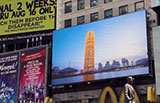
It says buildings within 100 meters of residential areas should not install glass on the sides facing apartment buildings, and outdoor advertisements and signs on LED screens should be turned off from 10:30 pm to 7:30 am.
The government of Nanjing in Jiangsu province issued guidelines on the illumination of urban landscapes that sought to limit lighting in certain areas. However, if the Guangzhou draft is passed, it will become China's first piece of local legislation on light pollution.
Li Mingguang, director of the Guangzhou Research Institute of Environmental Protection's policy research center, said there is no specific legislation on light pollution because studies of the issue are in their infancy.
Zhou Yongzhang, a professor of Earth sciences at Sun Yat-sen University in Guangzhou, said the light reflected by large areas of glass can damage the photoreceptor cells of the retina, and may result in road accidents.
Brightly lit advertisements that remain turned on at night may disturb people's body clocks or affect their sleep, and light pollution can be more harmful when combined with air pollution.
"Light can decompose pollutants in the air, forming new pollutants," he said. "This secondary pollution can be even more detrimental to human health."
According to the Guangzhou environmental protection department, the city's police received 34 complaints about light pollution between 2009 and 2013, and the figure rose to 70 between January 2013 and March 2014. The complaints were mainly related to road lighting and advertisements.
Li said light pollution has come to the fore in recent years in big cities such as Beijing, Shanghai and Nanjing.
Han said Guangzhou's draft legislation is a significant step, though it has flaws.
"For example, there are no restrictions on the brightness of lights or installation standards," he said. "Since there are no technical standards regarding light pollution, this is understandable."
Zhou said the real test will come if the regulations come into force, as effective implementation will be "a hard nut to crack".
"Light pollution is still largely misunderstood by China's academic circles and the general public," he added. "Besides regulations, more effort is needed to mobilize society to stand up against light pollution."
Xinhua in Guangzhou


Copyright 1995 - . All rights reserved. The content (including but not limited to text, photo, multimedia information, etc) published in this site belongs to China Daily Information Co (CDIC). Without written authorization from CDIC, such content shall not be republished or used in any form. Note: Browsers with 1024*768 or higher resolution are suggested for this site.
License for publishing multimedia online 0108263 Registration Number: 130349