China-dependent foreign businesses feel pinch as officials reduce largesse
As a graduate student in Australia six years ago, Liu Jingping moonlighted at a Chinese restaurant where many Chinese government officials on "work trips" would dine.
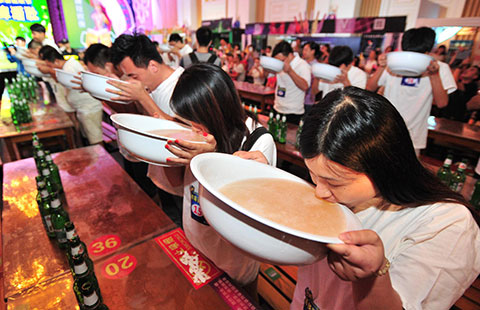
They would order lobster and other expensive seafood that they washed down with baijiu, the fiery, sorghum-based Chinese liquor.
But such overseas government trips are a thing of the past amid Beijing's anti-graft and austerity campaigns, which are reverberating far beyond its shores, said Liu, 34, now a tourism analyst and part-time tour guide.
The China-dependent sector of the global tourism industry has been hurting since President Xi Jinping put fighting corruption at the top of his agenda after coming into power in November 2012.
From casinos in Singapore to fashion houses in Europe, tourist traps the world over are feeling the sting of the triple-whammy of China's anti-graft push, its austerity drive and its slowing economy.
With the launch of an anti-corruption network among Asia-Pacific economies earlier this month and a pledge by the Group of 20 countries last weekend to increase cooperation to facilitate the recovery of ill-gotten gains, experts say the global impact of China's anti-graft drive might get stronger.
Already, weakness in the largely Chinese VIP business at Singapore's Marina Bay Sands dragged its third-quarter, VIP rolling-chip volume down by 34 percent.
Gaming revenue at Resorts World Sentosa similarly slipped, by 21 percent.
Europe has also not been spared, with tax-refund claims by Chinese tourists growing just 18 percent last year, compared with 57 percent in 2012, said tax refund firm Global Blue. It was at 80 percent in 2010.
Education sectors in the United States and Australia have also been under pressure, partly due to Beijing cutting off funding for civil servants' further studies and officials spending less on their children's education.
Chinese applications to US graduate schools fell 1 percent this year, after seven consecutive years of double-digit growth, according to the Council of Graduate Schools.
In Australia, where more than 25 percent of students are Chinese, a similar trend of softening demand is being observed, said Michael Sainsbury, editor of the Little Red Blog, which analyzes China news.
"Many believe the anti-corruption drive is at least a contributing factor," he said, adding that the trend could hurt Australian universities.
A key reason for young Chinese studying overseas has been the goal of acquiring permanent residency in the process, which would allow them to bring their mothers over, creating a "naked official" syndrome in China, he noted, referring to officials whose family members are all overseas.
The officials' foreign family connections are used to illegally move assets overseas or avoid probes.
"It is these 'naked officials' who have become obvious targets of Xi's campaign, so keeping one's family close to home is yet another way of avoiding attention," Sainsbury said.
As for sanctioned Chinese government trips, those to the US have fallen by up to 90 percent, according to some industry estimates.
Yang Jun, a director at China Ocean International Travel Service, said that official work trips, if any, now include little time for recreation, which previously made up about half of such trips.
"While personal expenses on shopping and food used to be submitted as claims, these practices have stopped," she added.
In Singapore, business people say that Chinese executives are declining to be wined and dined, with gifts - even items such as mooncakes - being turned down in case these might be misconstrued as bribes.
Another dampener on Chinese spending overseas is the launch of "Operation Fox Hunt," which targets corrupt officials who have fled abroad.
Since the operation's July launch, more than 300 suspects who had fled to 56 countries have been nabbed, said Chinese officials.
With the writing on the wall, firms dependent on Chinese tourists are bracing themselves for tough times ahead.
(China Daily 11/26/2014 page7)


Copyright 1995 - . All rights reserved. The content (including but not limited to text, photo, multimedia information, etc) published in this site belongs to China Daily Information Co (CDIC). Without written authorization from CDIC, such content shall not be republished or used in any form. Note: Browsers with 1024*768 or higher resolution are suggested for this site.
License for publishing multimedia online 0108263 Registration Number: 130349