Editor's note: Xinjiang is known for its colorful landscape and diverse culture. China Daily explores this beautiful region through its many faces and facets.
 |
|
|
More than a decade ago, Sharwangul dreamed of being a fashion designer.
But growing up in a poor rural household in the Yili Kazak autonomous prefecture of the Xinjiang Uygur autonomous region meant that the 30-year-old had to overcome many barriers to realize that dream.
Stepping out of her home for the job was made even more difficult because Sharwangul is a member of the Uygur ethnic group, she said. Like many Uygurs, Sharwangul has only one name.
"According to Uygur tradition, women are not encouraged to be seen in public frequently. Women also have fewer chances to be educated," she said.
But she got a big break when she was 16, getting the opportunity to learn dressmaking in Yining, Yili's capital.
Her parents, who supported their family of four children through farming, felt it was too tough to provide better living conditions for all the children, so they allowed Sharwangul to work, hoping she would become financially independent.
It proved to be a wise decision for both Sharwangul and her parents. After a year of study in a vocational school, she started operating a small tailor shop in her home.
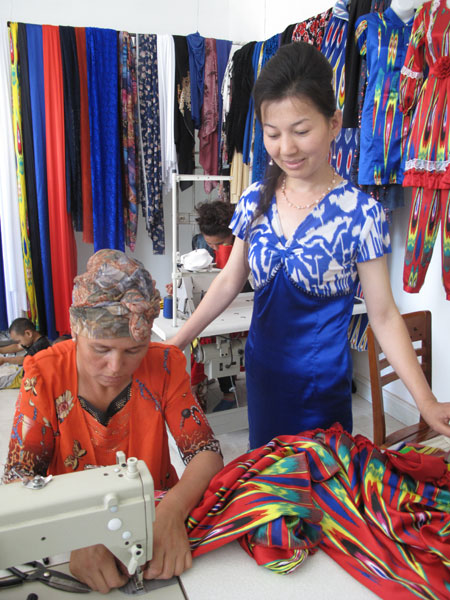
Sharwangul never imagined that she could one day expand her small shop into a bigger dressmaking studio until early this year, when the Huocheng county government invested about 9 million yuan ($1.45 billion) to build 13 factories for women and people from different ethnic groups and disabled people.
In Huiyuan, Sharwangul's hometown, more than 70 percent of the residents are ethnic Uygur, Kazak or Hui.
Sharwangul's studio belongs to a factory, one of the 13 supported by the government.
In addition to dressmaking, the factory also produces handicrafts, including traditional Uygur hats and lavender pillows. About 40 people are working in the factory, and another 20 positions are still available.
"All those jobs are suitable for women. Those with disabilities can also complete the work at home," said Jiang Lihong, director of the county's human resources and social security department.
Another 17 such factories will begin operations in the county by the end of this year, Jiang said.
The support has helped 13 women clinch their first jobs as dressmakers in Sharwangul's studio.
Now that she is starting to live her dream, Sharwangul is helping others along.
Rebia, 27, Sharwangul's sister-in-law, is one of the beneficiaries.
"Sharwangul gave me the confidence to work outside for my child and my family," Rebia said.
After delivering her first child one year ago, she joined Sharwangul's studio in February with her family members' support.
Mao Weihua contributed to this story.


Copyright 1995 - . All rights reserved. The content (including but not limited to text, photo, multimedia information, etc) published in this site belongs to China Daily Information Co (CDIC). Without written authorization from CDIC, such content shall not be republished or used in any form. Note: Browsers with 1024*768 or higher resolution are suggested for this site.
License for publishing multimedia online 0108263 Registration Number: 130349